Pallets can block a dock. Obsolete inventory can crowd active aisles. Broken fixtures can consume usable workspace. A warehouse cannot afford a cleanup that creates another operational problem. Facility managers need commercial warehouse junk removal that protects traffic, schedules, and safety boundaries. The goal is usable space without unnecessary disruption.
Commercial warehouse junk removal works best when the provider scopes materials, access points, staging, and operating schedules before loading begins. Vets Move Junk provides full-service, point-and-remove support for pallets, racking, industrial debris, and office items. Estimates use truck space and job scope. They do not use hourly quotes or fixed published prices.
Get a free onsite estimate for your commercial warehouse junk removal project.
That approach keeps the work tied to the facility’s actual needs. It gives managers a clearer way to coordinate removal around dock activity and employee movement. It also flags materials that require a qualified specialist. Here is how the process can fit into an active warehouse.
How Commercial Warehouse Junk Removal Works in an Active Facility
The most effective cleanout starts with the operating plan, not the truck. Before work begins, the facility manager and removal provider should walk the site or review detailed photos. Identify the removal material. Mark the loading path and staging area. Note dock access, restricted zones, and aisles that must remain open for employees or equipment.
1. Define the removal zone
Separate the project into clear zones. Use categories such as pallet and packaging debris, obsolete shelving or racking, damaged inventory, office items, and construction debris. Mark material that will remain on site. This makes the estimate more accurate and gives the crew a logical sequence.
It also helps the manager communicate the plan to warehouse staff, security, and the operations team. For the general preparation framework, review this warehouse cleanout planning guide.
2. Coordinate access and timing
An active warehouse may receive trucks, stage orders, operate forklifts, and process returns throughout the day. A removal plan should account for those movements. Schedule loading during a lower-volume period when possible.
Confirm dock and gate procedures. Choose a path that keeps people and powered equipment separated.
OSHA identifies powered industrial trucks, material handling, slips and falls, hazardous chemicals, and robotics among the hazards that require attention in warehousing environments. OSHA warehouse safety guidance is a useful reference when planning the work.
3. Load and clean the area
Full-service removal means the facility team does not have to dismantle, lift, carry, or load every item. The crew can work through the agreed zone, remove eligible material, and clean the area after loading.
The manager should identify equipment that must be disconnected by a qualified technician. Flag racking that needs an approved dismantling process before the removal crew arrives.
This approach differs from a general warehouse overview. The goal is a controlled handoff that returns usable space without an operational shutdown. For more preparation guidance, review this warehouse cleanout planning guide.
What Can Be Removed From a Commercial Warehouse?
Commercial warehouse junk removal can cover mixed loads, as long as the materials are identified and accepted before the appointment. A typical project may include items from several parts of the business.
Common warehouse materials
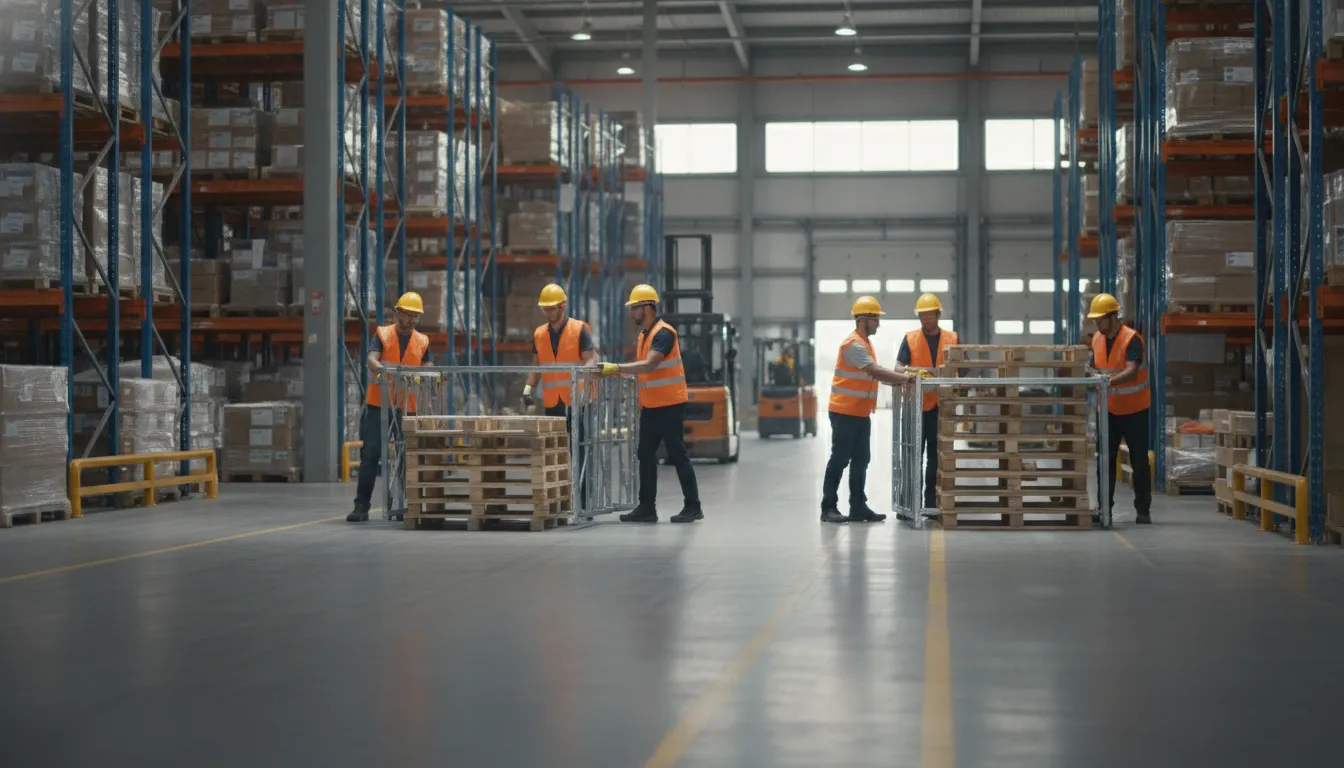
- Pallets and packaging: broken pallets, crates, cardboard, shrink wrap, and other material left after receiving or fulfillment.
- Racking and fixtures: obsolete shelving, display fixtures, work tables, cabinets, and non-operational storage components.
- Office and break-room items: desks, chairs, filing cabinets, appliances, and other furniture connected to the facility.
- Damaged or obsolete inventory: products, containers, and materials that the business has authorized for removal.
- Project debris: eligible lumber, drywall, carpet, and other debris from a repair, relocation, or build-out.
Organize a mixed load before the crew arrives. Keep items for donation, recycling, return, resale, or destruction separate from material ready for removal. This prevents mistakes. It also makes it easier to document what left the property.
What about chemicals, asbestos, or other hazardous materials?
Ordinary junk removal is not a substitute for hazardous-material abatement or industrial waste management. Chemicals, fuels, asbestos, unknown liquids, regulated medical waste, and other hazardous materials may need a specialist or an approved disposal process.
Do not place them in a general junk pile or ask a removal crew to handle an unidentified substance. Isolate questionable materials and ask the appropriate safety or environmental professional how they should be classified.
OSHA’s warehousing guidance highlights hazards facilities must recognize and control. EPA industrial waste guidance can help managers assess disposal decisions. Confirm the acceptance list before booking.
How Do You Minimize Downtime During a Warehouse Cleanout?
Downtime is usually reduced through preparation and sequencing, not by rushing people through a busy facility. Use this practical sequence to keep the removal project controlled.
- Inventory the material. Photograph the removal zone and list the broad categories, approximate quantity, and any unusually heavy or oversized item. Note whether pallets, racking, inventory, office furniture, or construction debris are included.
- Choose the operating window. Compare the cleanout with receiving schedules, shipping cutoffs, shift changes, forklift traffic, and planned maintenance. A flexible appointment can be more valuable than a fast appointment that conflicts with peak operations.
- Prepare the route. Confirm the entry gate, dock, elevator, loading area, parking restrictions, and route to the truck. Keep the path clear and explain temporary boundaries to employees before the crew arrives.
- Assign one site contact. A facility manager or delegate should identify approved items, answer access questions, and stop work if an unexpected hazard appears. One decision-maker reduces delays and conflicting instructions.
- Sequence the load. Start with material that is already sorted and accessible. Leave high-traffic areas, emergency routes, and active pick locations clear. Handle oversized items only after the crew confirms the route and equipment needs.
- Close out the zone. Walk the area after loading. Confirm the requested material is gone and check for loose debris or blocked access. Record excluded items for the right specialist.
Vets Move Junk documents warehouse cleanouts as a service designed to minimize disruption to business operations. Scheduling availability and an on-time, efficient crew can support that goal.
Actual duration depends on volume, access, sorting, dismantling, and site conditions. Treat the estimate and site plan as the source of truth for the specific facility.
Commercial Warehouse Junk Removal Pricing: What Facility Managers Should Know
Commercial warehouse removal pricing should reflect the actual scope of the job. A provider considers how much material will be removed and how much truck space it will use. Labor, access conditions, and special handling also matter.
That is why a site review is more useful than a generic online price for a warehouse project.
Vets Move Junk uses a volume-based model. Customers pay for the truck space used rather than an hourly rate. The quote is intended to account for the removal work as a whole. Read more about the company’s volume-based pricing before requesting an estimate.
| Project factor | What the provider needs to know |
|---|---|
| Load volume | Approximate amount of truck space required, from a small partial load to a full facility cleanout. |
| Material mix | Whether the load includes pallets, racking, furniture, inventory, appliances, or construction debris. |
| Access | Dock, gate, stairs, elevators, parking, distance from the truck, and active traffic near the removal zone. |
| Labor and preparation | Sorting, carrying, dismantling, oversized items, and cleanup requirements. |
How to make the estimate more accurate
Send clear photos from several angles. Identify the facility address and access rules. Estimate pallet stacks or shelving sections. Flag anything unusually heavy, sharp, unstable, or unknown.
Tell the provider whether the warehouse will remain operational during the work. Accurate details reduce surprises and help plan the correct crew and loading sequence.
Vets Move Junk offers free, no-obligation onsite estimates for commercial jobs. Its price-match policy states that the company will beat a written estimate from a licensed, insured, and bonded competitor.
Confirm the current terms and final scope during the estimate. Do not choose a vendor solely by the lowest headline number if the quote excludes labor, transportation, disposal, or cleanup.
How Should Facility Managers Choose and Book a Provider?
Facility managers should choose a warehouse removal provider that can work within site rules, define accepted materials, coordinate access, and explain the estimate before the crew arrives. Vets Move Junk supports commercial projects with full-service removal and volume-based estimates. Booking is built around the facility’s scope and operating window.
A warehouse removal partner should fit the facility’s operational and risk requirements, not just its hauling capacity. Before booking, ask how the provider handles access coordination, mixed loads, oversized items, excluded materials, cleanup, and scope changes.
Request proof of licensing, insurance, and bonding when your facility or landlord requires it.
Questions to ask before work begins
- What materials are accepted, and what must go to a hazardous-material or specialty contractor?
- Can the crew work within a scheduled dock or shift window?
- Who is responsible for dismantling racking, disconnecting equipment, or preparing inventory?
- How will the provider keep employees, forklifts, and the loading route separated?
- Does the estimate include loading, transport, disposal, and cleanup?
- What happens if the actual load is larger or smaller than the photos suggested?
Vets Move Junk is Veteran Owned & Operated. The company presents its commercial work around punctuality, efficiency, and minimal disruption.
Its customer information also identifies the operation as licensed, insured, and bonded. Confirm those details against your facility’s vendor requirements before the appointment.
For broader business hauling considerations, see the guide to commercial junk hauling. If you manage several properties or recurring turnovers, use this commercial junk removal checklist to standardize intake and approval.
When you are ready, gather the removal list, photos, access instructions, preferred operating window, and site contact details. Then request a free onsite estimate so the provider can assess the warehouse and build the plan around your facility’s needs.
What Should Managers Prepare Before the Crew Arrives?
Managers can make commercial warehouse junk removal more efficient by preparing an item list, photos, access rules, a safe loading route, and one site contact. Vets Move Junk can use those details to understand the job scope, identify questions about materials, and build a removal plan around the facility’s operating needs.
Preparation is especially useful when several teams share responsibility for the building. Operations may know the shipping schedule. Safety staff may control restricted areas. Security may manage gate access. Procurement may need the estimate and insurance documents. Give each group a defined role before the appointment.
Build a simple removal brief
- Removal list: Name the broad material categories, such as pallets, packaging, fixtures, racking, furniture, or eligible project debris.
- Photos: Include wide views of the removal zone and closer views of unusually heavy, oversized, sharp, unstable, or uncertain items.
- Access notes: Explain the gate, dock, parking, elevator, stairs, loading restrictions, and distance from the work area to the truck.
- Operating plan: Note receiving periods, shipping cutoffs, shift changes, forklift traffic, and any area that must remain open.
- Decision-maker: Identify one contact who can approve items, answer questions, and stop work if an unexpected safety concern appears.
Keep regulated or unknown materials separate from the ordinary removal pile. If an item may require hazardous-material abatement or industrial waste management, ask the appropriate safety or environmental professional how to handle it. A clear boundary protects the crew and helps the facility avoid a last-minute change in scope.
This preparation also creates a better record for recurring work. Save the final item list, access instructions, exclusions, and closeout notes. A property manager coordinating several facilities can use the commercial junk removal checklist to standardize that intake.
When the brief is ready, submit it with the request for a free onsite estimate. The provider can then assess the actual material and access conditions instead of relying on a vague description. That conversation is the right place to confirm accepted items, timing, labor, cleanup, and any facility documentation needed before work starts.
Get a free onsite estimate for your commercial warehouse junk removal project.
Frequently Asked Questions
What items are typically removed from a commercial warehouse?
Common removals include pallet racking, office equipment, furniture, construction debris, outdated retail inventory, pallets, and other non-hazardous materials. Separate regulated, chemical, or unknown materials before the crew arrives so they can be evaluated through the appropriate specialist or disposal channel.
Does commercial warehouse junk removal include hazardous materials?
Generally, no. Standard junk removal does not accept hazardous materials, chemicals, asbestos, or other regulated waste. Tell the provider about questionable items during scheduling, and keep them isolated from ordinary debris. OSHA identifies hazardous chemicals, forklifts, material handling, and slips and falls among warehousing hazards, so the cleanout plan should protect workers and keep active operations controlled.
How quickly can you clear a commercial warehouse?
The schedule depends on the volume, access conditions, item type, crew requirements, and operating constraints. Flexible scheduling, including 24/7 scheduling availability, can help coordinate work around receiving, shipping, and production. Request a site assessment early rather than assuming same-day service will fit a complex facility.
How is commercial warehouse junk removal pricing determined?
Commercial pricing is based on the amount of material, the truck space it occupies, and the labor required to remove it. Vets Move Junk uses volume-based pricing, so the estimate reflects the space used instead of a fixed published dollar amount. A free, no-obligation onsite estimate gives facility managers a clearer scope before booking.
Can a provider handle a full facility cleanout?
Yes. A commercial crew can coordinate a broader cleanout involving warehouse areas, offices, storage zones, furniture, fixtures, and mixed non-hazardous debris. Before booking, identify access points, loading requirements, restricted areas, items requiring disassembly, and materials that need a separate licensed handler. This preparation helps reduce downtime and avoid surprises on the scheduled workday.
Get Started With a Warehouse Removal Plan
A clear onsite assessment can help facility managers define the removal scope, coordinate access, and plan work around daily operations. Vets Move Junk is Veteran Owned & Operated and provides a practical starting point for commercial warehouse projects without fixed pricing assumptions.
Get a free onsite estimate for your commercial warehouse junk removal project