
Appliance Removal San Diego Without Heavy Lifting
An old refrigerator on a stair landing is more than an eyesore. It is a lifting injury and costly scratched wall waiting for a shortcut.
Book appliance removal in San Diego with Vets Move Junk and let the crew handle the heavy lifting.
Appliance removal San Diego residents schedule with Vets Move Junk is full-service pickup for old appliances: you point out the item, and the crew lifts it. That means no dragging a refrigerator through a narrow hallway, no wrestling a washer down stairs, and no loading it into your vehicle. This matters on staircases and tight turns. Bulky weight can harm people, floors, walls, door frames, or railings during a rushed DIY move. For refrigerators and other refrigerant appliances, the EPA explains that refrigerant must be properly removed before an appliance is buried, shredded, or dismantled. Vets Move Junk is a veteran-owned, full-service option for labor, transport, and responsible disposal, scheduled online or by phone.
The question is not just where an old appliance goes; it is how to clear it safely, on schedule, without carrying it yourself. Appliance removal San Diego homeowners can use without heavy lifting starts with choosing what the crew handles before arrival. Here’s how.
Appliance removal San Diego homeowners can use without heavy lifting
This section explains full-service removal from inside the home.
Removal from inside the home
With appliance removal San Diego homeowners usually want a clear answer: who will remove a large machine from inside the home? Vets Move Junk provides full-service pickup, so the appliance does not have to reach the curb first. You point out what needs to go, and the crew handles the lift and removal.
This matters when a refrigerator sits in a narrow kitchen, or a washer must leave through a stairwell. Lifting, pushing, and pulling heavy items can lead to overexertion injuries, according to a CDC manual handling safety report. Avoiding a solo carry also helps protect walls, floors, door frames, and your back.
Prep for large appliances
Old refrigerators, stoves, washers, dryers, microwaves, dishwashers, and water heaters can all create removal problems. A bulky machine may not clear a doorway without careful turns. It may also have a water line, gas connection, vent, or electric hookup that calls for safe prep.
Customers do not need to drag an appliance outside or guess how to handle complex disconnection work alone. When booking, explain the appliance type, its location, stairs, and any hookups you can see. The team can confirm what must be ready before pickup and plan the safest route out.
If several unwanted items are leaving at once, a full-service visit can keep the work in one coordinated pickup. The local San Diego junk removal service page explains service in the area and how to request an onsite estimate.
Responsible removal after pickup
Removal is not only about getting a heavy item through the door. Refrigerators and some cooling appliances contain refrigerants that require proper handling before an appliance is dismantled or disposed of. The EPA appliance disposal guidance explains that refrigerant must be removed before those steps occur.
For homeowners, full-service pickup means no curb haul and no awkward stair carry. There is also no need to sort out disposal on pickup day. It is a practical choice for renovations, moves, rental turnovers, and replacing a worn appliance in a San Diego home.
What appliances can be removed?
Appliance removal in San Diego can cover the large household units that are hard to lift and move through a home. Vets Move Junk lists removal service for refrigerators, stoves, washing machines, and dryers on its what we take resource. Its service information also lists ovens, microwaves, and dishwashers as major appliances that removal teams may handle.
Kitchen appliances
Common kitchen pickup needs include an old refrigerator after a replacement arrives, or a stove that no longer fits a remodel plan. Ovens, dishwashers, and microwaves may also need removal when a kitchen is cleared out. Before booking, note whether an item is built in, disconnected, or still in place.
- Refrigerators, including units that are too bulky for a curbside move.
- Stoves and ovens from a replacement or kitchen cleanout.
- Dishwashers and microwaves ready to leave the home.
Refrigerators need added care after pickup because they may contain refrigerant. The EPA safe disposal guidance says refrigerant must be removed before an appliance is buried, shredded, or taken apart. That makes proper handling important after the unit leaves your kitchen.
Laundry appliances
Washers and dryers are also listed among the appliances Vets Move Junk removes. These machines can be awkward to move from garages, upstairs laundry rooms, or tight hallway spaces. Customers can point out the items for pickup rather than carrying heavy appliances on their own.
- Washing machines that have been replaced or are no longer working.
- Dryers removed during a move, upgrade, or property cleanout.
- Matching laundry sets that need to be taken away together.
Moving a large appliance often means lifting, pushing, pulling, or carrying a bulky object. A CDC report on manual material handling links overexertion during those tasks with disabling injuries. Planning removal is useful when stairs, corners, or limited space make a laundry unit harder to move.
Item-specific questions before booking
A freezer or a small countertop appliance may not call for the same handling as a standard major appliance. Check the current what-we-take page or the booking flow before setting out a freezer or small appliance. This confirms whether the exact item can be included with your pickup.
If several appliances are leaving at once, make a short list before scheduling. It helps the team understand the pickup scope, including units in a garage or upstairs room. For local service details, review local junk removal crew before booking your removal window.
Why stairs, tight spaces, and old hookups make appliance removal risky
An old refrigerator or washer may look simple to roll out of a home. The job changes fast when it involves a narrow hall, a staircase, or a hookup that has not moved in years. Safe removal starts with the path and the connections, not with lifting.
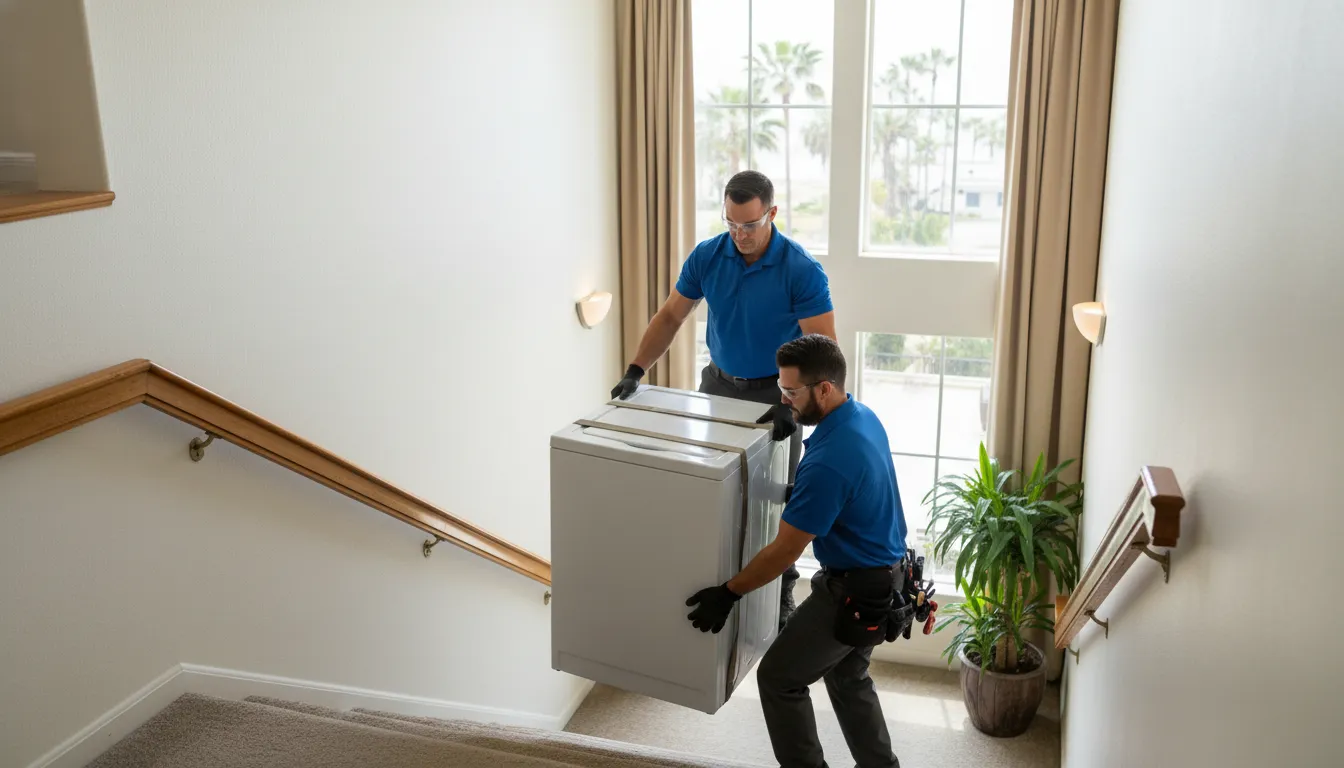
Weight, edges, and strain
Large appliances are hard to grip and can shift as soon as they tilt. Lifting, pushing, pulling, and carrying are manual handling tasks linked to overexertion injuries, according to a CDC manual handling report. A hand truck helps, but it does not remove the need for control.
Sharp sheet metal, exposed brackets, and loose doors also create trouble. A sudden shift can pinch hands, scrape a door frame, or mark flooring. Water left in a washer hose or fridge line can spill after the unit starts moving. Unplugging a machine does not always make it ready to carry.
Stairs, elevators, and turns
Stairs leave little space to correct a bad angle. One person may be below the appliance while another cannot see the next step. In apartments and condos, an elevator adds door tracks, tight corners, and shared surfaces that need protection.
A trained crew checks the route before the appliance leaves its spot. For full-service junk removal in San Diego, that route may include hall width, stair landings, and elevator access. The crew also finds the closest safe loading area. This plan helps limit rushed turns and avoid damage to walls, rails, and floors.
- Clear rugs, cords, pet gates, and small furniture from the exit path.
- Protect floors and door edges before rolling or pivoting a heavy unit.
- Keep people and pets away from stairwells and active loading areas.
- Confirm parking and elevator rules before work begins in a shared building.
Older hookups and safe handoff
Older connections deserve a pause before any appliance moves. A corroded water valve can resist turning, and a brittle drain or supply line can leak when disturbed. Gas appliances add another concern: a questionable connection should be handled by the right qualified trade, not forced loose during hauling.
A removal team can ask whether utilities are shut off and whether a unit is already disconnected. It can also stop if a valve, line, or fitting does not look safe to move. That is not a delay; it is how a small removal job avoids becoming a water or gas repair.
Refrigerators, freezers, and some cooling appliances need care after they leave the home. The EPA safe disposal guidance says refrigerant must be removed before an appliance is buried, shredded, or dismantled. Safe appliance removal includes protecting the home on the way out and routing the item for proper handling afterward.
Appliance disposal options in San Diego compared
San Diego households have several ways to clear an old fridge, washer, or oven. The right route depends on whether the unit works, who can lift it, and how soon the space must be cleared. Working items may fit donation, retailer, or recycling programs. Broken or heavy units often call for pickup help.
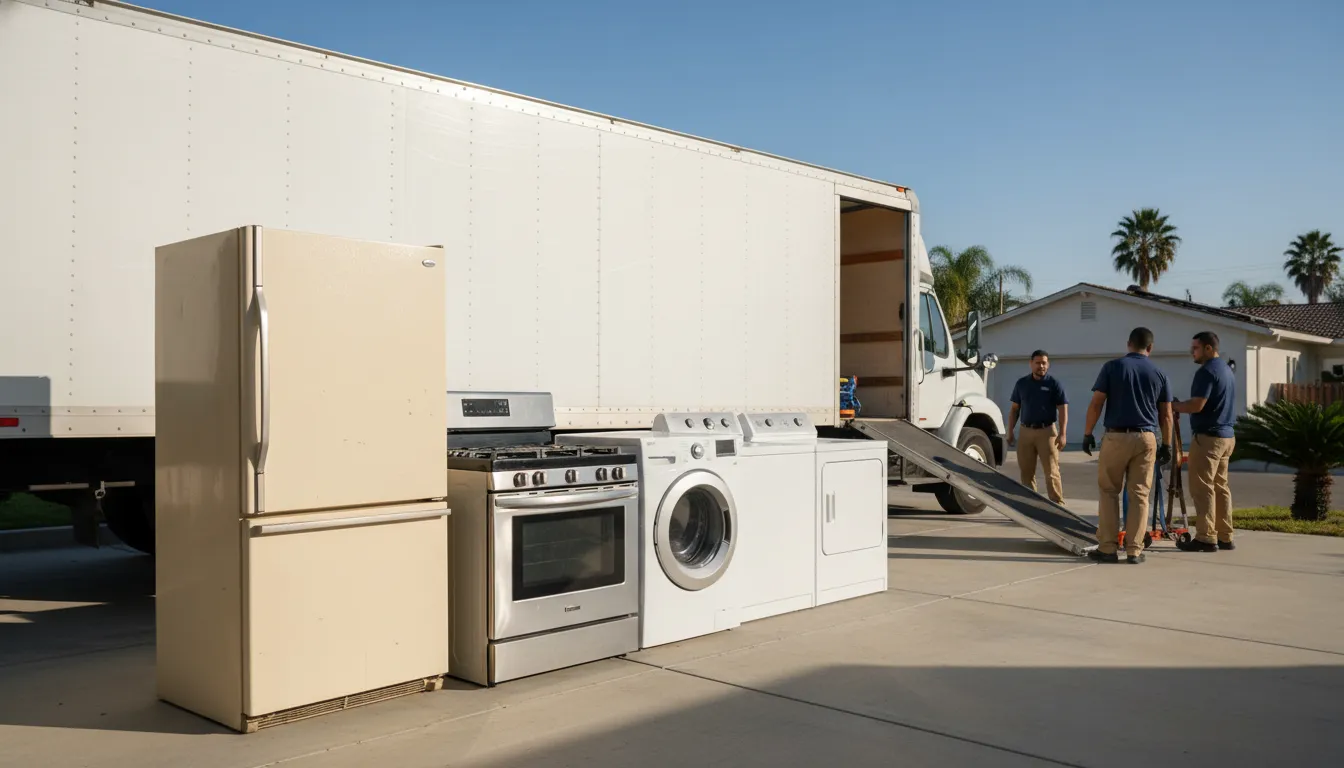
Working units and refrigerant rules
A working appliance gives you more choices, since another household or approved group may be able to use it. Ask a donation center about item type, age, condition, and pickup rules before planning around that route. If you are buying a new unit, ask the retailer whether haul-away is offered with delivery.
Donation is only a fit when the receiving group accepts the item in its current condition. A retailer option is tied to a new purchase, so it may not solve a move-out or cleanout. Both paths require confirmation first; do not leave a unit outside without a confirmed handoff.
A refrigerator, freezer, air conditioner, or similar unit needs careful end-of-life handling because it can contain refrigerant. The EPA states that refrigerant must be properly removed before an appliance is buried, shredded, or dismantled. That rule matters whether you choose pickup or take the item to a site yourself.
Effort and timing by option
No option is right for every home. Compare the effort, timing, and limits before you move an appliance out of its place. If it must go down stairs or through a narrow hall, plan for lifting and home protection first.
| Option | Best fit | Main benefit | Limit to check |
|---|---|---|---|
| Full-service junk removal. | Heavy, broken, or several items. | Loading and transport handled. | Confirm price and accepted items. |
| City recycling resources. | Planned disposal. | Local guidance or program path. | Rules, schedule, and pickup access. |
| Retailer haul-away. | New appliance delivery. | Old unit leaves during replacement. | Purchase and service terms. |
| Donation. | Working, usable item. | Possible reuse. | Condition and pickup acceptance. |
| DIY drop-off. | Safe vehicle and lifting plan. | You choose the trip time. | Site acceptance and handling effort. |
San Diego residents can check city or local recycling resources for possible drop-off or collection paths. These routes may suit someone who can wait, transport the item, or follow set preparation rules. Confirm current details before disconnecting lines, removing doors, or moving the unit outside.
Heavy items and full-service pickup
Full-service pickup can be a practical fit when an item is broken, bulky, upstairs, or part of a larger cleanout. With San Diego hauling team, the crew handles removal. The homeowner does not need to stage the item at a curb or load it into a vehicle.
Removal help also cuts down on repeated handling when several appliances must go at once. That can help during renovations, rental turnover, or estate cleanouts. Ask what is included in the service and where accepted items go after pickup.
DIY drop-off may be sensible when you have safe transport, time, and a site that accepts the item. Before lifting, confirm accepted appliances, drop-off rules, possible fees, and required preparation. For a heavy appliance, avoiding unsafe handling matters more than saving a trip.
How scheduling appliance removal works
Booking details
Scheduling appliance removal San Diego service should be simple, even when the item is bulky or hard to reach. If you are clearing a home, rental, or office, use these steps to plan pickup without moving the appliance yourself.
Schedule your appliance pickup online before the old unit blocks another hallway, garage, or rental turnover.
Start by knowing what needs to go and where it is located. A little detail up front helps the team arrive prepared for the appliance and the path out.
-
Book a pickup time. Start with the online option to schedule appliance removal, or call if you would rather discuss the job. Choose a day that lets you be present or gives a property contact access.
-
Describe the appliance and access. List each refrigerator, washer, dryer, stove, or other bulky item you want removed. Share any stairs, elevators, narrow doors, parking limits, or a gated entry.
-
Confirm your arrival window. The team provides an arrival window, so you do not need to wait all day. Ask in advance about any steps needed for water, gas, or power connections.
-
Review the job onsite. When the crew arrives, point out each item and the safest path out. The team assesses the load and explains volume-based pricing before hauling begins.
-
Let the crew handle the lifting. Full-service removal means you do not need to drag an appliance outdoors or down stairs. See details about junk removal option for San Diego homeowners before scheduling a local pickup.
-
Send items to the right next stop. The team hauls appliances for the right disposal or recycling path. Refrigerators need special care because rules require refrigerant removal before shredding, dismantling, or burial.
Pickup day preparation
You do not need to lift the appliance before the truck arrives. Remove personal items from inside it, and clear the route of toys, boxes, and pets. If a building has loading rules or access codes, share them when you book.
For a rental unit or managed property, confirm who can approve removal on pickup day. This small step prevents delays when the crew is ready to work. It also helps keep access clear for residents and staff.
Responsible disposal
Removal does not end at the curb. The EPA guidance for appliances with refrigerants explains why refrigerators require proper handling. Mention refrigerated appliances during booking, so the team starts with the right pickup information.
How should you prepare before appliance pickup?
A clear route out
Before the truck arrives, look at the route from the appliance to the outside door. Move rugs, small tables, boxes, shoes, and cords out of that route. Open gates or garage doors if they are part of the path.
Do not try to carry a washer or refrigerator to make pickup faster. The CDC links lifting, pushing, pulling, and carrying with injury in its manual handling safety review. Leave bulky lifting and tight turns for the removal team.
Tell the crew about stairs, narrow landings, elevators, steep driveways, or limited parking when you book. In a condo or apartment, confirm elevator access and any loading rules first. These notes help the team plan a smooth pickup.
Food, shelves, and hookups
Empty food from refrigerators and freezers before pickup. Remove loose shelves, trays, racks, and detachable hoses only if they lift out safely. Put small parts in a bag near the appliance, so nothing shifts or gets lost during removal.
Check whether the item is still linked to water, gas, a vent, or hard-wired electrical service. If a disconnect is needed, arrange skilled help before pickup. Do not loosen gas fittings or handle wiring on your own.
Refrigerators and some cooling units can contain refrigerant. The EPA lists safe disposal steps for refrigerant appliances. Do not puncture lines or try to drain a unit.
A calm pickup area
Keep children and pets away from the work route and the loading area. Set aside keys or gate codes the crew may need. If you are replacing a unit, mark the old appliance clearly to avoid confusion.
For area service page, your booking note can include the appliance type, floor level, and access details. With the route clear and hookups addressed, leave the heavy lifting to the pickup team.
What affects the cost of appliance removal?
Appliance size and load volume
A removal quote starts with what needs to leave the property. A microwave is easier to carry and load than a refrigerator, range, washer, or dryer. A single appliance also takes less truck space than several items from a remodel or move-out.
Vets Move Junk uses volume-based pricing rather than a promised hourly rate. The crew can review the items on site and provide a clear quote before work begins. This approach helps homeowners and property managers plan local service details without guessing at the final scope. A larger load can use more room, but grouping appliances can keep the work in one visit.
Access from the appliance to the truck
The path out of the home matters. Stairs, narrow hallways, tight turns, elevators, gated entries, and long walks to the truck can add work. Tell the removal team about these details when booking, so the quote reflects the actual pickup conditions.
- Note each appliance and where it is located.
- Point out stairs, parking limits, gates, or elevator access.
- Share whether other unwanted items should go in the same load.
Heavy appliances can be hard to move safely across stairs or uneven paths. Full-service removal means the crew handles lifting, loading, and transport. Customers can leave bulky items in place instead of moving them to a curb or garage first.
Disposal needs and an all-inclusive quote
Disposal requirements also affect the job. Refrigerators and some cooling appliances contain refrigerants that need proper handling. The EPA safe disposal guidance says refrigerant must be removed before an appliance is buried, shredded, or taken apart.
A useful quote should explain what is included, not just state a pickup amount. With full-service appliance removal, pricing covers labor, hauling, transport, and responsible disposal fees. That matters when comparing an in-home pickup with an option that asks you to disconnect, move, or drop off the appliance yourself.
For appliance removal San Diego households can compare quotes by asking the same questions each time: What items are included? Are stairs and inside pickup covered? Does the quote include disposal? Clear answers make it easier to choose the service level that matches the property and the load.
Reserve a pickup window when you are ready to clear the appliance without lifting it yourself.
Frequently Asked Questions
Does San Diego offer free appliance removal?
Free appliance pickup may be available for certain items through local programs or recyclers, but it is not guaranteed. Full-service appliance removal in San Diego usually includes pickup labor, hauling, and disposal in the quoted price. Vets Move Junk uses volume-based pricing, so the cost depends on the space an appliance uses in the truck and any related items.
How do I schedule appliance removal in San Diego?
Schedule appliance removal by identifying each item, its location, and access issues such as stairs or narrow doors. With Vets Move Junk, customers can request service online or by phone. Tell the team whether the appliance is disconnected or still connected to utilities. The crew can then plan labor, vehicle space, and a suitable arrival window.
Are there fees for appliance disposal in San Diego?
Fees depend on the service route and how much work is included. A drop-off or limited pickup option may price differently from indoor removal involving stairs and loading. Vets Move Junk uses volume-based pricing that includes labor, transport, and disposal-related costs. Ask what is included before booking, especially for refrigerators, freezers, or items requiring careful handling.
Where does my old appliance go after removal?
After removal, an appliance may go to a recycler or another appropriate disposal facility, depending on its condition and components. Refrigerators, freezers, window air conditioners, and similar units need careful handling because they contain refrigerants. The EPA states that refrigerant must be properly removed before an appliance is buried, shredded, or dismantled.
What types of appliances do removal services accept?
Full-service appliance removal commonly covers refrigerators, washers, dryers, stoves, ovens, microwaves, dishwashers, and water heaters. Vets Move Junk lists major household appliances among the items its full-service junk removal crews handle. When booking, identify each item, note stairs or tight hallways, and mention any built-in installation or utility connection so the crew can prepare safely.
Ready to book appliance removal in San Diego?
An unwanted appliance left in place can keep taking up usable room and postpone the cleanup you already know needs attention this week. Trying to move it yourself can also add avoidable strain, damaged flooring, or delays when stairs and tight turns get involved at home. Booking now puts the heavy-lifting plan on your calendar, so the space can be cleared sooner and your next project can move forward.
Do not let one bulky item hold up a safer, cleaner home project when professional help is within reach. Ready to book appliance removal in San Diego? Book appliance removal in San Diego to choose a convenient pickup time without the heavy lifting.