Closing a restaurant involves more than emptying the dining room. You may also need to coordinate inventory, fixtures, furnishings, debris, landlord requirements, utility shutoffs, records, and specialized handling before the space is returned.
A practical restaurant cleanouts checklist starts with confirming the lease handback standard. Sort items by their next destination, and separate ordinary removable contents from regulated or specialized materials. Arrange loading and final cleanup around the closing plan. A professional removal crew can help with eligible items when the volume, labor, access, or deadline makes self-hauling impractical.
Get a free on-site estimate for your cleanout
Before anyone begins loading, define exactly what must leave, what stays with the business, and what requires a qualified provider. That scope makes the rest of the closing-day checklist easier to manage.
What Should Restaurant Cleanouts Include?
A restaurant cleanout usually starts with a clear inventory of what must leave the space before a closure, relocation, remodel, or lease handback. The scope may include unwanted dining furniture, shelving, general clutter, packaging, non-hazardous debris, and other removable contents. Some restaurant cleanout providers also describe kitchen appliances and fixtures as part of their scope, but eligibility varies by company, item, condition, access, and disposal requirements.
For Vets Move Junk, restaurant-specific equipment removal is not a confirmed service. Before booking, send a complete item list and ask which materials can be accepted. Do not assume that commercial kitchen appliances, refrigeration units, food waste, grease, chemicals, hazardous materials, or regulated waste are included. Those items may require the landlord, a licensed trade, a specialized hauler, or another qualified provider.
Common cleanout categories to review
- Furniture: dining tables, chairs, booths, counters, and waiting-area pieces that are no longer needed.
- Fixtures and storage: shelving, display pieces, cabinets, and movable non-specialty fixtures, subject to confirmation.
- General business contents: boxes, packaging, outdated supplies, office items, and other non-hazardous clutter.
- Removal-area debris: loose materials left after approved items have been separated and prepared for loading.
Separate items into four groups before requesting an estimate: keep or transfer, sell or donate, coordinate with a specialized provider, and ask a removal company to review. Photograph oversized items, note stairs or loading-dock limits, and identify anything the landlord wants left in place. The goal is not simply an empty dining room. It is a documented scope that supports a practical handback plan.
Vets Move Junk handles commercial cleanouts for businesses, offices, warehouses, retail spaces, and properties. Review the company’s commercial junk removal guide and confirm restaurant-related item eligibility before scheduling.
What to Confirm Before Closing Day
-
Confirm the landlord’s handback standard.
- Ask for the required condition in writing, including which fixtures, furnishings, shelving, and debris must remain or be removed.
- Clarify whether the space must be empty, broom-swept, or inspected before keys are returned.
- Confirm the walkthrough date, sign-off process, loading rules, elevator reservations, insurance requirements, and responsibility for repairs.
A California lease-return checklist can help organize those questions, but your lease and landlord control the final scope.
-
Assign access and site responsibilities. Name one person to open the property, direct the crew, protect items that are staying, and approve the final sweep. Confirm parking, loading-dock access, gate codes, building hours, stairs, elevators, and any security or property-management check-in. If gas, water, or hard-wired electrical connections are involved, arrange disconnection and capping through the appropriate licensed trade before removal.
-
Check closure permits, licenses, and local accounts. The California Department of Tax and Fee Administration says businesses should close applicable permits, licenses, and accounts when they stop operating, sell, change ownership, or stop taxable activity. Its guidance also covers reporting the closure date and inventory disposition. Review the CDTFA closure guidance, then contact the city and county offices where the business was registered. California’s small-business closure guidance recommends using CalOSBA’s closing resources and CalGOLD to identify relevant agencies and permits. This is an administrative checklist, not legal or tax advice.
-
Separate final records from removal items. Preserve contracts, employee and vendor records, permits, maintenance documents, receipts, and inventory records before anything leaves the site. CDTFA states that records should be kept for four years after an account closes. Ask your accountant or the relevant agency what applies to your business, and keep digital copies in a controlled location.
-
Confirm ownership and disposition. Mark every item as keep, transfer, sell, donate, landlord-owned, or approved for removal. Do not assume abandoned property belongs to you. Get written approval for anything the landlord, a buyer, a partner, or another operator claims, and retain photos of the agreed handback condition.
-
Review specialized work separately. Food-safety closure matters, refrigeration service, refrigerant recovery, utilities, hazardous materials, and regulated waste belong with the appropriate health department, utility, licensed trade, certified technician, or qualified disposal provider. Confirm those handoffs before scheduling general cleanout work, so the removal scope is clear and safe.
Which Items Need Specialized Handling?
Not everything in a restaurant cleanout belongs in the same removal plan. Separate ordinary furnishings and loose contents from materials that require a licensed trade, regulator, utility, or specialized disposal provider.
Food, grease, and regulated waste
Remove or dispose of food, cooking grease, chemicals, sharps, fuels, and other potentially hazardous or regulated materials through the appropriate qualified provider. Do not place unknown containers or contaminated materials in a general removal load. California food-facility oversight covers food preparation practices, facility condition, and food storage, so confirm requirements with the local environmental health authority before clearing these areas. California food-facility guidance can help identify the relevant safety considerations.
Utilities and built-in equipment
Gas, water, and hard-wired electrical connections should be shut off and disconnected by the appropriate licensed professional before an item is moved. Coordinate those steps with the landlord and qualified trades so removal does not create a leak, electrical hazard, or lease-compliance problem.
Refrigeration and refrigerants
Walk-in coolers, reach-in units, ice machines, and other refrigeration equipment may contain refrigerant. EPA Section 608 rules require technicians servicing stationary refrigeration equipment to follow specific practices, including evacuation to established vacuum levels when equipment is opened for service or disposal. EPA Section 608 requirements also address recovery and recycling, while refrigerant reclaimers must be EPA-certified. Arrange this work before scheduling removal.
Vets Move Junk’s restaurant-equipment capability is not confirmed. Before requesting an estimate, check what items the company takes, and separately coordinate any food, grease, hazardous, utility, or refrigerant work.
How to Sort Inventory, Fixtures, and Debris
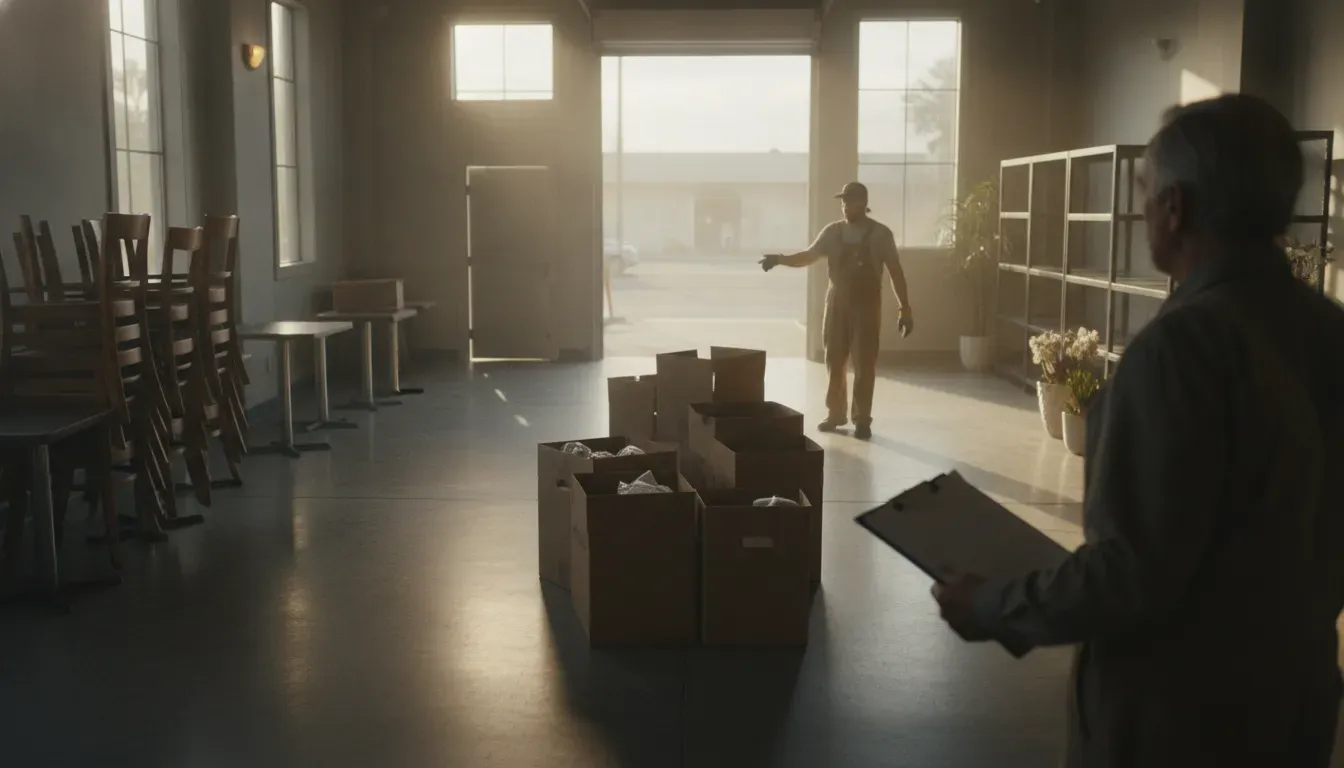
Sorting before removal keeps valuable items from being discarded and makes the final handback easier to verify. Start with a walkthrough of every room, storage area, back-of-house space, and exterior access route. Photograph major fixtures, note dimensions, and record anything the landlord or next operator expects to remain.
Use four clearly marked categories
- Keep or transfer: Set aside items moving to another location, including records, smallwares, furniture, or fixtures the owner has approved for reuse.
- Sell or donate: Separate clean, usable items and document who is collecting them and by what date. Working commercial equipment may have resale value, but confirm ownership, condition, and buyer requirements before relying on a sale.
- Qualified disposal: Create a separate list for food, grease, chemicals, refrigerants, regulated materials, or anything requiring a licensed trade or specialized provider. Do not place these items in an ordinary removal scope without confirmation.
- Removal estimate: Group ordinary unwanted contents that are eligible for removal, such as approved furniture, shelving, general clutter, or debris. Confirm item eligibility with the provider before scheduling.
Before anything connected to gas, water, or hard-wired electricity is moved, have the appropriate licensed trades disconnect and cap those lines. Make sure the crew has a clear route, loading access, parking instructions, and authorization to enter restricted areas.
End with a joint walkthrough against the inventory list. Identify items left in place, confirm the agreed handback standard, and request a broom-swept finish where appropriate. For a broader sequence covering access, fixtures, and turnover, use this business cleanout planning checklist.
How Do Restaurant Cleanouts Pricing Estimates Work?
For a restaurant cleanout, the estimate should reflect the amount of material being removed, not an hourly clock. Vets Move Junk describes its commercial model as volume-based: the truck space used helps determine the estimate. That makes the walkthrough especially useful when the scope includes a mix of furniture, shelving, fixtures, and general business contents. Restaurant-specific items and specialized materials still need to be reviewed for eligibility before work is scheduled.
How to think about cleanout volume during an estimate
| Cleanout size | Possible planning examples | Next action |
|---|---|---|
| Single item | One unwanted table, shelving unit, or other approved item that can be assessed separately. | Share the item, its location, and access details for a scope review. |
| Multiple items | A group of dining furnishings, office contents, shelving, or loose commercial debris gathered for removal. | Identify what stays, what goes, and any access limits before the on-site estimate. |
| Larger truck-space plan | A broader property cleanout involving several rooms or a substantial volume of approved contents. | Arrange a walkthrough so the team can evaluate the full scope and required truck space. |
Vets Move Junk states that its free on-site estimate has no obligation. Its all-inclusive estimate framing covers loading labor, transportation and disposal fees, and cleanup of the removal area. It is still important to separate those removal decisions from landlord requirements, utility disconnections, food-safety obligations, and regulated or hazardous materials that require the appropriate qualified provider.
For more detail, review how volume-based junk removal pricing works, then request a free on-site estimate with the address, access conditions, preferred scope, and items that must remain in place.
When Is Professional Removal Worth It?
Professional removal is worth considering when the cleanout would pull owners or staff away from closing tasks, customer service, or the next business priority. It can also make sense when there is more material than the team can safely move. Consider the route from storage to the loading point, stairs, restricted access, and the landlord handback date. These factors can leave little room for repeated trips.
Labor is often the deciding factor. Vets Move Junk describes its service as handling the loading and cleanup, so customers do not have to do the heavy lifting themselves. That can be useful when furniture, shelving, general debris, or other approved items need to be gathered and loaded as one coordinated removal. Item eligibility should be confirmed before the appointment, especially for restaurant-specific equipment, food waste, grease, hazardous materials, or regulated materials that may require another provider.
Access and volume matter just as much as the item list. A walkthrough or detailed scope can identify where items are located, how the crew will reach them, and whether the removal area needs to be cleared in stages. Share loading restrictions, elevator or gate requirements, parking limitations, and the desired handback condition early. This gives the removal team better information and helps the business coordinate separately with the landlord, licensed trades, utilities, and qualified specialists.
The cleanup benefit is another practical consideration. Vets Move Junk describes all-inclusive service as covering loading labor, transportation or disposal fees, and cleanup of the removal area. Its commercial service also aims to minimize disruption to business operations, although the actual sequence depends on the site and approved scope. For more planning guidance, review these commercial junk hauling options and request a free on-site estimate for the items that are eligible for removal.
How Can You Schedule a Cleanout Without Disrupting Handover?
Start with a walkthrough before choosing a removal window. Review every room, storage area, exterior access point, and item that should remain. Mark what is being transferred, sold, donated, handled by a specialist, or considered for removal. A clear scope helps prevent last-minute decisions while the landlord or property manager is waiting for the space.
Confirm the scope and access plan
Ask the landlord or property manager what handover condition is required. Confirm whether the space must be empty, broom-swept, or cleared only of tenant-owned items. Record loading-door access, elevator rules, parking restrictions, building contacts, and any certificate-of-insurance requirements. If gas, water, hard-wired electrical, refrigeration, or other building-connected systems are involved, coordinate disconnection and preparation with the landlord and the appropriate licensed trade. Do not treat a removal crew as a substitute for utility, food-safety, or hazardous-material professionals.
Choose a realistic arrival window
Schedule the cleanout around the final inventory count, utility work, landlord inspection, and key handover. Share the planned arrival window with employees, vendors, building staff, and anyone responsible for items that must stay. Leave room for access delays or unexpected sorting rather than promising a fixed completion time. A free on-site estimate can help clarify the removable scope and volume before you commit to a date.
Complete a final sweep
After loading, walk the property with your checklist. Check back rooms, restrooms, patio areas, coolers, storage corners, walls, and floors for items or debris that were overlooked. Photograph the cleared condition, return keys and access devices as directed, and request landlord confirmation when appropriate. This final review protects the handover record without assuming that every item is eligible for removal.
Get a free on-site estimate for your restaurant cleanout
Frequently Asked Questions
What is included in a restaurant cleanout?
A cleanout plan can cover unwanted furniture, shelving, fixtures, ordinary debris, and other eligible items identified during the walkthrough. Separate anything to keep, transfer, sell, donate, or send to a qualified disposal provider. Confirm item eligibility and access requirements before scheduling removal.
How do estimates for restaurant cleanouts work?
Estimates are based on the type and volume of items, loading conditions, access, and labor involved rather than a fixed published price. A free on-site estimate can help confirm the scope and identify which materials require separate handling before work is scheduled.
How long does a restaurant cleanout take?
Timing depends on the final item list, preparation, access, loading conditions, and any licensed or regulated work that must happen first. Build in time for sorting, utility disconnections, landlord requirements, and a final sweep. A walkthrough can support realistic scheduling without promising a fixed completion time.
What requires specialized handling during a restaurant cleanout?
Food waste, grease, refrigerants, hazardous materials, regulated waste, gas connections, and hard-wired electrical equipment should be coordinated with the appropriate licensed trade, certified technician, regulator, landlord, or qualified provider. Do not assume these materials are included in ordinary removal service.
How should I schedule a restaurant cleanout?
Start with a walkthrough and a written scope, then confirm the handover date, access instructions, parking or loading limits, and who is responsible for specialized work. Share photos or an inventory when requesting an estimate so the provider can review the job accurately.
Get Started With Your Restaurant Cleanout
A clear scope and on-site review can help you plan removal around your closing-day handover. To discuss the items, access details, and cleanup needs for your restaurant, get a free on-site estimate. Share your preferred timing and site details so the next steps are based on the actual cleanout rather than assumptions.