
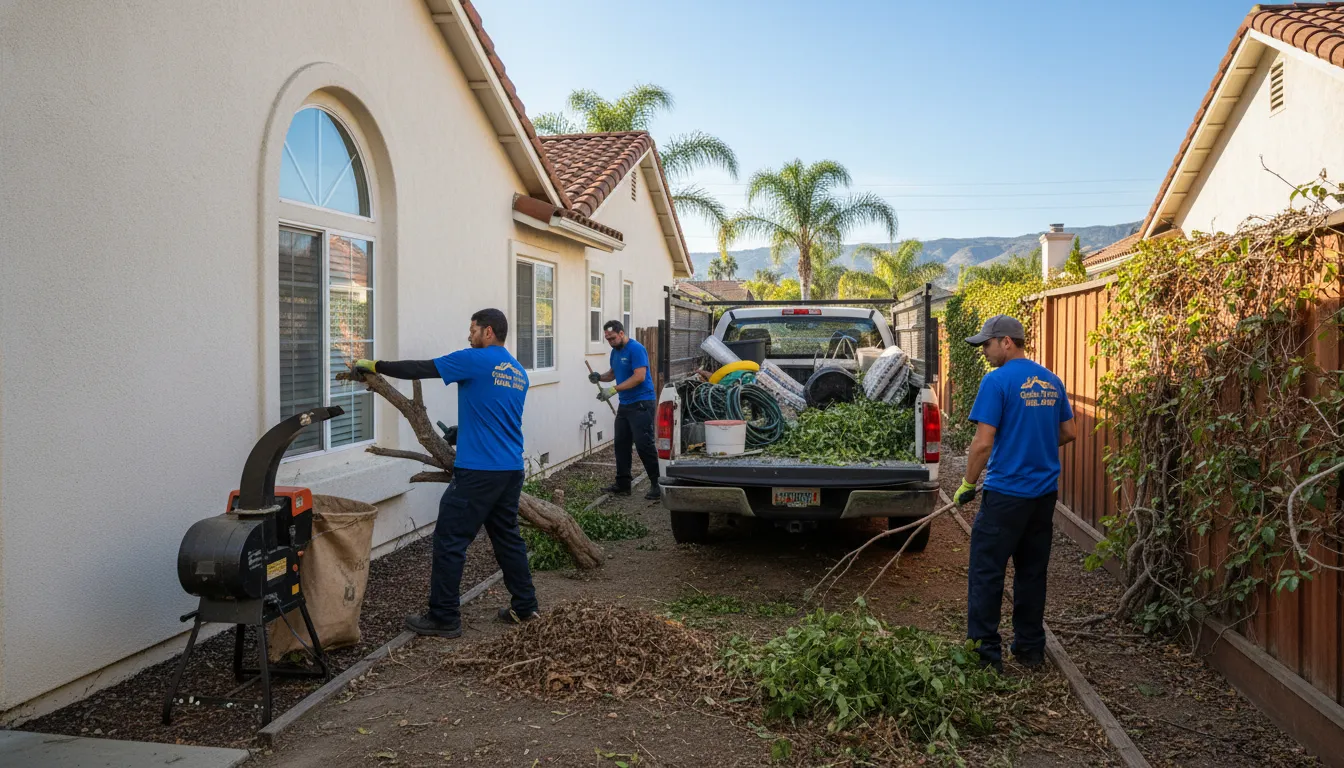
A side yard packed with branches, bags, and broken outdoor items is more than an eyesore. It can turn the simplest yard cleanup into a heavy hauling job.
Get a free onsite estimate from Vets Move Junk →
Yard waste removal is a full-service pickup for leaves, grass clippings, branches, brush, shrubs, mulch, soil, old fencing, and other debris around your property. For California homeowners, a professional crew can clear crowded side yards, lift bulky piles, load the truck, and leave the cleared area broom-clean. This full-service option works especially well when curbside collection limits, narrow access, heavy material, or mixed debris make a do-it-yourself cleanup slow and difficult. A full-service appointment can also combine organic waste with broken planters, old outdoor furniture, and other unwanted items that routine green-waste pickup may reject. Responsible disposal also matters because diverting organic material from landfills helps reduce methane emissions and extend landfill life, according to the EPA.
The right service depends on what is piled up, where it sits, and whether you need lifting, loading, cleanup, and responsible disposal. What yard waste removal includes for California homes explains the materials and service steps to expect. The path begins with
What yard waste removal includes for California homes
Yard waste removal is the pickup and hauling of unwanted material from outdoor areas. It can cover routine garden debris, larger cleanup piles, and non-hazardous clutter left in a side yard. For California homeowners, full-service hauling means a crew handles the lifting, loading, and removal.
Common yard waste and outdoor debris
A typical pickup may include loose or bagged plant material from pruning, mowing, or clearing an overgrown space. Crews can also haul bulky outdoor items that do not fit in a green waste cart. This makes the service useful after seasonal yard work, landscaping, or a move.
- Leaves, grass clippings, and brush.
- Branches, shrubs, and small tree debris.
- Mulch, soil, and other garden material.
- Old planters, pots, and outdoor decor.
- Broken fencing and general non-hazardous debris.
Vets Move Junk reviews accepted materials during the onsite estimate because these materials do not all follow the same disposal path. Organic debris may be suitable for composting, while old planters or fencing may need sorting. The EPA explains that composting keeps organic material local and returns nutrients to soil.
How full-service hauling works
Full-service yard waste removal goes beyond curbside pickup. You point out the material, and the crew moves it from the yard, side gate, patio, or other accessible area. That setup removes the need to bundle branches, lift heavy planters, or make disposal trips yourself.
The crew loads the truck and leaves the work area broom-clean after hauling. This can help when a side yard holds mixed piles that a standard green cart cannot take. For larger or heavily overgrown spaces, the guide to overgrown yard cleanup explains factors that can shape the job.
Yard debris can also be removed during a broader property cleanout. For example, a crew may haul branches from the yard along with unwanted patio furniture or garage clutter. Keeping the work under one pickup can reduce the steps needed to clear the property.
Items that need confirmation
Accepted items can vary based on material type, weight, volume, and local disposal rules. Soil, large logs, treated wood, fencing, and mixed construction debris may need separate review. Hazardous materials are not treated as standard yard waste and should never be added without approval.
Before booking, describe the pile and note any heavy or unusual items. Photos can help the team understand access limits and the mix of debris. Check the current What We Take guidance for exact rules, then confirm uncertain items when requesting an onsite estimate.
What makes side yard cleanouts different?
Side yard cleanouts are different because the debris is often stored behind gates, sheds, fences, or narrow access paths. Vets Move Junk can remove approved yard waste and outdoor clutter from where it sits, so homeowners do not have to drag branches, soil, fencing, or broken outdoor items to the curb.
A side yard can become a holding area for items that never make it to the curb. Branches collect near fences, old outdoor gear gets stacked, and storm debris fills the remaining path. Full-service yard waste removal clears the whole area without asking the homeowner to drag each load forward.
Access through a narrow side yard
Side yards often have tight gates, air-conditioning units, uneven ground, or plants along the route. A cleanout crew needs to see the path before moving bulky or heavy items. Homeowners should point out fragile surfaces, locked gates, pets, and any items that must stay.
The Vets Move Junk crew can then carry debris from where it sits and load it for removal. This setup works well for piles behind sheds or next to fences. It also helps when loose brush, soil, old fence pieces, and general debris are mixed together.
- Stacked patio items and unused outdoor gear.
- Branches, brush, shrubs, leaves, and mulch.
- Old fence sections, soil, and storm debris.
- Mixed piles stored beside sheds or fences.
Help beyond curbside pickup
Curbside pickup may still leave the hardest part to the homeowner: sorting, lifting, and moving each item through a narrow route. Full-service cleanout work starts at the pile. The homeowner points out what goes, and the crew handles the lifting and loading.
This approach is useful when a side yard has become overgrown or hard to reach. A larger overgrown yard cleanup may also include heavy branches and debris from other parts of the property. Combining those items into one project can keep the work organized.
Vets Move Junk uses volume-based pricing, so the amount loaded into the truck shapes the price. An onsite review helps the crew see mixed materials and access limits before work begins. It also gives the homeowner a clear chance to confirm which items should remain.
Planning the cleanout route
Before the appointment, open the gate and move cars away from the loading route when possible. Mark anything that looks disposable but needs to stay. Keep children and pets away from the work path while items are being carried out.
Organic yard material may be handled apart from old furniture, fence pieces, or other junk. The EPA explains that composting organic material can keep nutrients local and reduce landfill methane. Clear sorting at the start helps the crew understand the pile and plan the load.
Homeowners can request a free onsite estimate when the pile is too large or awkward for curbside service. Photos and access notes can help describe the job. The crew can then plan for the gate, route, material mix, and amount of truck space needed.
How does the yard cleanup and hauling process work?
The process starts with booking a free onsite estimate, walking the crew through the yard, and confirming what should be removed. After approval, Vets Move Junk handles the lifting, loading, hauling, and cleanup so the customer does not have to bag, bundle, or move every item first.
Full-service yard waste removal follows a clear path from the first estimate to the final sweep. You point out what needs to go, while the crew handles the lifting, loading, and hauling. Knowing each stage helps you prepare the area and avoid surprises on cleanup day.
Booking and the onsite review
Start by describing the job and setting a time for a free onsite estimate with Vets Move Junk. Share details about access, heavy items, and the mix of debris. You can use the online booking form to request an estimate for your yard or side yard.
- Book the visit. Explain where the debris sits and whether gates, stairs, slopes, or parked cars may affect access.
- Walk through the yard. When the crew arrives, show them every pile and item you want removed. Point out anything that should stay.
- Review the onsite estimate. The crew checks the full load before work starts. Yard cleanup uses volume-based pricing, so the amount of truck space used affects the price.
- Approve the work. Confirm the scope and estimate before loading begins. Ask about any item the crew may not take or any access concern.
- Load the debris. The crew lifts and carries approved branches, brush, leaves, old fencing, and general outdoor debris. Keep children and pets away from the work path.
- Sweep the cleared area. After loading, the crew leaves the work area broom-clean. Walk through the yard and check the cleared spots before the truck departs.
- Haul and sort the load. The crew takes the material away and uses available local disposal options. Ask how organic and mixed materials will be handled in your area.
What to confirm before loading
A clear item review keeps the estimate tied to the actual job. Separate the debris you want removed from garden tools, pots, furniture, or materials you plan to keep. If the pile is large, learning how debris removal cost per cubic yard works can help you understand volume-based pricing.
Tell the crew about sharp pieces, heavy soil, hidden wire, or other hazards before anyone starts lifting. Make sure gates can open and the route from the pile to the truck is clear. These simple checks help the loading stage move in an orderly way.
Responsible disposal where available
Yard loads can contain both organic material and general debris, so not every item follows the same route. Local facilities and rules shape the options available after pickup. A crew should avoid promising that every load will be recycled or composted.
When local composting is available, it can keep organic material out of landfills and return nutrients to soil. The EPA explains the benefits of composting, including reduced landfill methane and longer landfill life. Ask what options apply to your load, especially when it includes fencing, soil, or mixed debris.
Is curbside pickup or full-service yard waste removal better?
Curbside pickup is usually better for small, sorted yard debris that meets local cart, bag, bundle, and schedule rules. Full-service yard waste removal is better when debris is bulky, mixed, heavy, urgent, or stored away from the curb. Vets Move Junk fits the second scenario.
Curbside pickup and full-service hauling solve different cleanup problems. The right choice depends on the material, pile size, access, timing, and how much lifting you can do.
Municipal pickup often works for routine lawn care when everything fits the approved cart or bundle rules. Full-service yard waste removal is better suited to large piles, mixed outdoor junk, and material stored away from the curb.
When curbside pickup works
Curbside service can be the simple choice for small amounts of leaves, grass clippings, and trimmed branches. You sort, bag, bundle, and move the material to the collection point. Local rules may limit container types, branch sizes, pile volume, and pickup days, so check them before starting.
This route also makes sense when the cleanup is not urgent and you can do the lifting. Keeping clean organic material separate may support composting. The EPA explains that composting recovers nutrients and keeps organic material out of landfills.
| Comparison point | Curbside pickup | Full-service hauling |
|---|---|---|
| Best fit. | Small, sorted yard waste. | Large or mixed cleanup. |
| Labor. | You bag and move it. | Crew lifts and loads. |
| Access. | Items must reach the curb. | Crew can collect from the yard. |
| Timing. | Set collection schedule. | Booked service window. |
| Final cleanup. | You clear loose debris. | Crew leaves the area broom-clean. |
When full-service hauling fits better
Full-service hauling becomes useful when the pile will not fit in bins or approved bundles. It also helps when branches, brush, soil, old fencing, and general debris are mixed together. Review what the crew can take before booking a mixed load.
Access matters as much as volume. A pile behind a gate or along a narrow side yard may require repeated trips to the curb. With full-service hauling, the crew collects, lifts, loads, and sweeps the work area. That removes the need to carry bulky or heavy material across the property.
Urgent projects can also favor a booked hauling service. A yard may need to be cleared before a move, property showing, repair visit, or larger cleanout. Instead of waiting through several curbside collection cycles, the whole pile can be handled during one service visit.
How to choose between them
Start by separating clean organic waste from outdoor junk. Then check whether the organic material fits local curbside rules and whether you can move it safely. If both answers are yes, curbside pickup may be enough.
Choose full-service hauling when the job includes bulky items, mixed debris, difficult access, or more material than curbside service accepts. For a large project, understanding debris removal cost per cubic yard can help you compare volume-based hauling with other options.
A quick site review can settle close calls. Note the pile location, likely truck access, material types, and any items that need special handling. Those details help a hauling team assess the work and provide a clear onsite estimate.
What should you prepare before your pickup?
Before pickup, identify what should go, separate possible hazardous items, explain access limits, and point out anything that must stay. Vets Move Junk still handles the heavy lifting, but clear instructions help the crew estimate the load, protect the property, and remove approved material efficiently.
A little planning helps a yard waste removal crew understand the job and start without delay. You do not need to lift or load everything yourself. Instead, make the materials easy to identify and share any details that could affect access or handling.
Sort and identify the pickup
Walk through the yard before the Vets Move Junk crew arrives and decide exactly what should go. Point out separate piles, loose branches, bagged leaves, brush, soil, old fencing, and other outdoor debris. Mark anything that must stay, especially when it sits close to a removal pile.
Keep paint, fuel, chemicals, batteries, and other possible hazardous materials apart from the yard waste. Ask the provider whether those items are accepted before pickup day. Review the company’s What We Take page or ask the crew about any item you are unsure about.
- Group similar materials when it is safe and easy.
- Keep pets and children away from the work area.
- Tell the crew about sharp, heavy, or unstable items.
- Do not hide debris beneath leaves or brush.
Explain access limits early
Tell the crew if the pile is behind a locked gate, down a steep path, or beside a narrow driveway. Also mention low branches, soft ground, stairs, parking limits, or any area where a truck cannot fit. Clear small obstacles when possible, but leave heavy lifting to the crew.
Photos can help explain the pile and the route from the yard to the truck. They also show whether an overgrown yard cleanup involves more than loose green waste. Still, an onsite review gives the crew the clearest view of volume and access.
Prepare estimate and disposal questions
Gather any written estimate from a licensed, insured, and bonded competitor if you want to discuss the price-match guarantee. Make sure it describes the same materials and level of service. Ask what the quoted price covers, how truck space affects cost, and whether any items need separate handling.
Ask how the crew plans to handle organic material after pickup. The U.S. Environmental Protection Agency explains that composting can return nutrients to local soil and keep organic matter out of landfills. The answer can help you understand the disposal plan before work begins.
When the details are ready, request a free onsite estimate and share your access notes, photos, and item list. Confirm which materials are accepted before the appointment. Clear instructions let you point out what goes while the crew handles hauling and cleanup.
When should you schedule yard waste removal?
Schedule yard waste removal when the pile is too large for regular pickup, the material is mixed with outdoor junk, access is narrow, or a deadline is coming. Vets Move Junk is especially useful after landscaping, tree trimming, storm cleanup, fence work, move-outs, listing photos, or HOA notices.
After outdoor work or a major cleanup
Schedule yard waste removal with Vets Move Junk as soon as a project leaves more debris than your regular pickup can handle. That point often comes after tree trimming, landscaping, fence work, or a large garden cleanup. Booking the haul after the work ends keeps crews from returning for a second load.
Do not wait for branches, brush, or soil to take over a side yard. A full-service crew can handle the lifting and leave the work area broom-clean. If growth has become hard to manage, plan an overgrown yard cleanup before starting other outdoor projects.
Before a deadline or property event
A clear deadline makes scheduling easier. Arrange pickup before listing photos, an open house, a move, or a visit from guests. Removing outdoor clutter early gives you time to see whether another area needs attention.
HOA notices and city cleanup rules can also set the schedule. Check the notice or local guidance for the exact deadline and accepted materials. Then book yard waste removal with enough time to sort out access, parking, and load size.
California property managers and business owners may also need pickup before an inspection or tenant turnover. Grouping yard debris with other approved outdoor items can make one cleanout more practical. Review what the crew can take before the appointment.
After storms or when access is blocked
Schedule service after a storm when fallen limbs and loose debris block gates, walkways, driveways, or work areas. First, wait until conditions are safe. Keep people away from downed power lines and unstable trees, then arrange removal for debris that can be handled safely.
Prompt cleanup also helps keep usable outdoor space clear. When organic debris can be composted, it may return nutrients to local soil instead of going to waste. The EPA explains the benefits of compost, including keeping organic material out of landfills.
Book before the pile becomes harder to reach or starts blocking routine property care. Tell the removal team where the debris sits and whether a truck can reach it. Clear details help the crew plan the visit and prepare for heavy or bulky materials.
Frequently Asked Questions
What is the best way to get rid of yard waste?
The best method depends on the material, pile size, and local collection rules. Compost suitable leaves and grass, use municipal collection for accepted items, or hire full-service hauling for large or mixed piles. Composting keeps nutrients local and reduces landfill methane emissions, according to the EPA. Confirm local restrictions before setting anything out.
How can you get rid of branches for free?
Check whether your city provides curbside brush collection, seasonal cleanup days, or a free green-waste drop-off site. Rules often limit branch length, diameter, bundle size, and pickup frequency. Small untreated branches may also be chipped or composted where local rules allow. If branches exceed municipal limits or require lifting from a side yard, paid hauling may be necessary.
Will waste management services pick up yard waste?
Many municipal and private waste services collect leaves, grass, brush, and branches, but accepted materials and schedules vary by location. Some require paper lawn bags, tied bundles, a green cart, or a separate appointment. Contact your local provider before placing debris curbside. For mixed outdoor clutter or material outside collection limits, a full-service yard waste removal company may be a better fit.
How does full-service hauling work for a side yard cleanout?
For a side yard cleanout, the Vets Move Junk crew removes approved yard waste and outdoor clutter from where it sits, then loads and hauls it away. This avoids moving heavy branches, soil, or old fencing to the curb yourself. Ask the provider about narrow access, material restrictions, volume-based pricing, and whether the cleared area will be left broom-clean.
Ready to Clear Your Yard and Side Spaces?
Outdoor clutter rarely becomes easier to handle when it sits, and Vets Move Junk can help turn the cleanup into one scheduled pickup. Delayed cleanup can keep useful side yards and outdoor spaces out of reach. Starting now helps you clear the backlog before more branches, bags, broken items, and loose debris turn one hauling job into a larger project. With a plan in place, you can move from crowded paths and piled-up corners to a clear, usable yard without spending weekends lifting and loading.
Ready to clear the outdoor clutter that keeps getting pushed aside? Requesting an estimate now gives you a clear next step and a practical timeline for getting the work off your list. Get a free onsite estimate to schedule full-service hauling for your yard and side spaces.