
A treadmill that was easy to assemble in an open room can become a serious obstacle when it has to pass through a doorway, turn on a landing, or travel down stairs. Safe treadmill removal starts with a realistic route plan, not an improvised lift. Homeowners and property managers should account for the machine’s uneven weight, moving parts, power components, and the rules at its final destination before anyone picks it up.
Get a free onsite estimate for treadmill removal.
Vets Move Junk can assess access conditions, explain the firm onsite price before work begins, and handle the heavy lifting. This guide explains how to prepare the area, compare disposal and recycling options, and recognize when professional hauling is the practical choice. Acceptance of a treadmill or any electronic component depends on its condition and applicable local requirements, so confirm the details before pickup.
Why treadmill removal takes more planning than expected
Treadmill removal is difficult because a treadmill is bulky, unevenly weighted, and hard to steer. The safest plan considers door widths, turns, stairs, floor protection, disassembly requirements, and the number of people needed before the machine moves.
A treadmill is not shaped like an ordinary box. The motor and front roller concentrate weight at one end, while the deck and upright console create a long frame that can be awkward to control. Folding the deck may reduce its footprint, but it does not make the machine light. A locking mechanism can also release if it is not secured correctly.
Access is often a bigger challenge than the machine itself. A treadmill may fit comfortably in a bedroom or fitness room but still be too wide for the doorway once its handrails and console are attached. Tight hallways, ceiling fixtures, low railings, and stair turns leave little room to correct a bad angle.
Common risks during a do-it-yourself move
- Back and hand injuries: A sudden shift can put most of the load on one person or pinch hands against a wall.
- Damage to the property: The frame can scrape paint, dent drywall, mark flooring, or strike a stair rail.
- Damage to the treadmill: Pulling on the console, wiring, or handrails can break components that were not designed as lifting points.
- Blocked shared access: In an apartment or managed property, a stalled move can obstruct corridors, elevators, or exits.
The CDC’s National Institute for Occupational Safety and Health explains that safe lifting depends on more than an item’s weight. Reach, twisting, travel distance, frequency, and grip all affect risk. Its lifting equation overview helps explain why a bulky treadmill on stairs is not a routine two-person carry.
How should you prepare a treadmill for removal?
Prepare a treadmill by unplugging it, securing loose parts, checking the owner’s manual, photographing connections, measuring the exit route, and clearing obstacles. Leave risky disassembly and lifting to an experienced crew when the route includes stairs or tight turns.
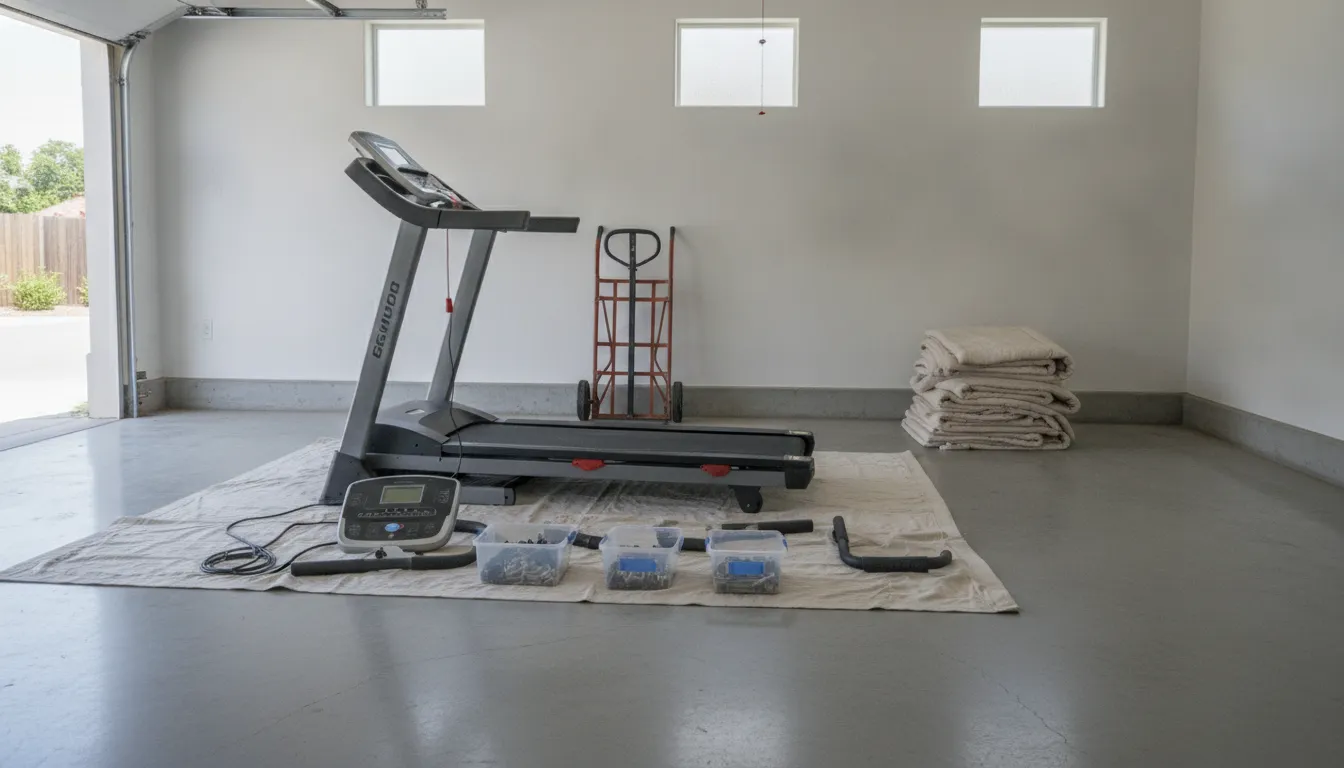
Good preparation shortens pickup time and prevents surprises. Start by finding the model number and owner’s manual. The manual can identify the folding lock, power requirements, recommended moving position, and the parts the manufacturer expects owners to remove. If the manual is unavailable, do not guess around wiring or the motor housing.
Use this preparation checklist
- Turn off and unplug the treadmill. Secure the cord to the frame so it cannot catch under a wheel or become a trip hazard.
- Remove personal accessories. Take away mats, tablets, water bottles, removable trays, and other loose items.
- Secure the deck and moving parts. Use the manufacturer’s locking system when available. Do not rely on a damaged latch.
- Photograph the machine. Clear photos help document its condition and show how cables and removable pieces connect.
- Measure the full route. Check the treadmill, doors, halls, stair turns, elevator openings, and the final exit.
- Clear and protect the path. Remove rugs, cords, decor, and small furniture. Keep children and pets away during pickup.
- Share access details. Tell the hauling team about stairs, gates, parking restrictions, elevator reservations, and long carries.
Do not begin complex disassembly simply to save time. The console may contain wiring that runs through the uprights, and the motor cover can protect sensitive electrical components. If the route cannot accommodate the assembled unit, a professional crew can decide what should come apart onsite.
What can happen to an unwanted treadmill?
An unwanted treadmill may be reused, donated, recycled, collected through an eligible municipal bulk program, or hauled away. The right option depends on whether it works, whether a recipient accepts it, and how local facilities handle its electronic and metal components.
Choose the destination before moving the treadmill out of the room. A machine left at the curb without confirmed collection may create a safety problem, violate local rules, or require a second move. Always contact the receiving organization or program first.
Reuse or donation
A working treadmill may have value to a buyer, nonprofit, community group, or fitness facility. Be candid about its age, condition, dimensions, and any missing parts. Confirm that the recipient accepts treadmills and determine who is responsible for carrying and transporting it. Donation acceptance policies can change because these machines require storage space and handling equipment.
Recycling
Treadmills combine metal, plastic, rubber, wiring, circuit boards, and other components. A recycling facility may accept the complete unit, require partial disassembly, or accept only certain materials. The U.S. Environmental Protection Agency recommends checking local electronics programs and electronics donation and recycling options rather than assuming every facility handles every device.
Municipal bulk collection
Some local programs collect bulky exercise equipment by appointment, while others exclude items with electronic components or require specific preparation. Verify the current rules, pickup location, scheduling window, and any fees directly with the local provider. Do not place the machine outside until collection is confirmed.
When reuse, recycling, or bulk pickup does not fit the situation, review the types of bulky items Vets Move Junk can evaluate. Confirm treadmill and component acceptance when booking.
When is professional treadmill hauling the practical choice?
Professional treadmill hauling is practical when the machine is upstairs, the path is narrow, disassembly is required, or the property has access rules. A trained crew can assess the route, use appropriate moving equipment, and remove the machine without making the owner coordinate the lift.
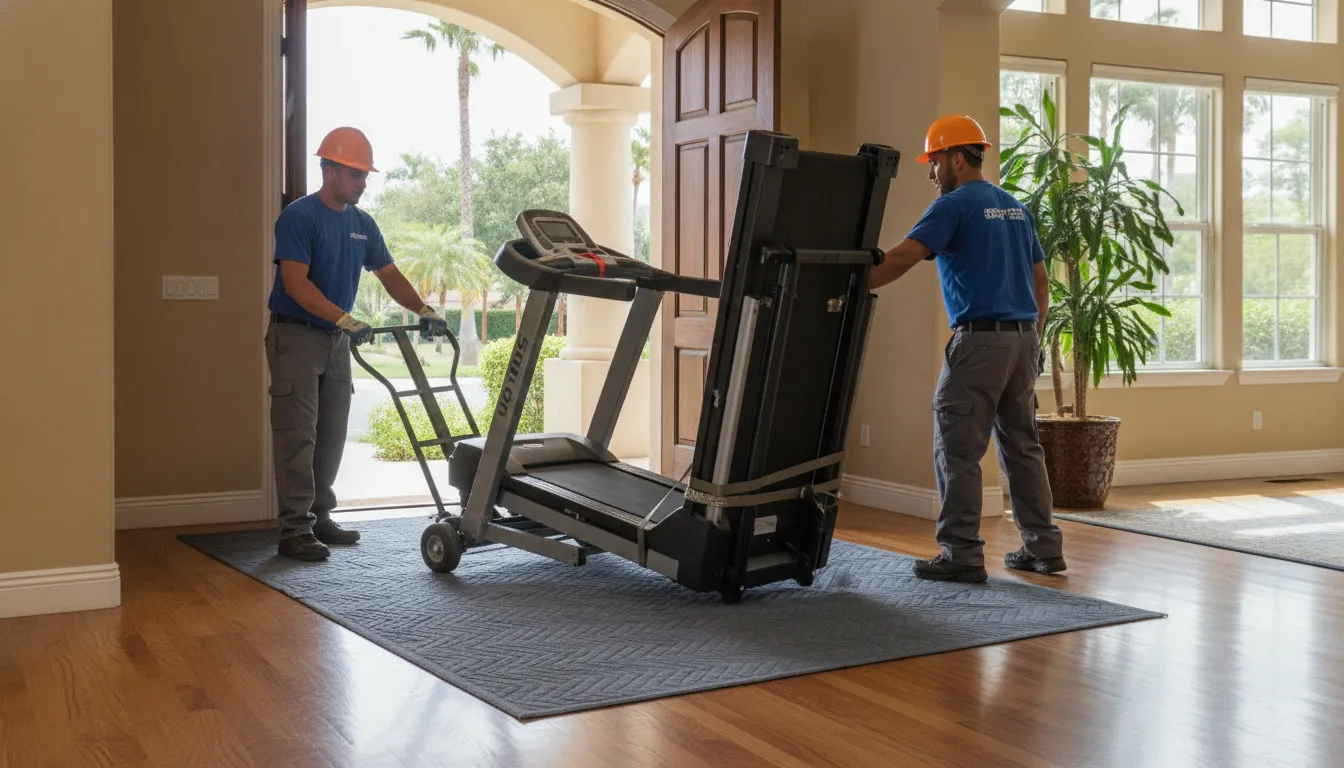
A ground-floor treadmill beside a wide exterior door is very different from a commercial unit in an upstairs fitness room. Professional help becomes especially useful when there are stairs, sharp turns, fragile floors, limited parking, or no safe team available to control the load.
Signs that a do-it-yourself move is not worth the risk
- The treadmill must travel down or up a flight of stairs.
- The assembled machine is wider than a doorway or elevator opening.
- The folding lock, wheels, or frame appears damaged.
- No one involved knows the correct lifting points or disassembly sequence.
- The property requires insurance documentation, an elevator reservation, or a narrow service window.
- The owner wants the treadmill and other heavy fitness equipment cleared in one visit.
A professional team can inspect the route before committing to a moving method. Vets Move Junk provides a firm onsite price before the work starts, so the property owner can approve the plan with clear expectations. For a broader view of the process, see the company’s guide to professional junk hauling.
Book a free onsite estimate and let the crew assess the safest removal plan.
Treadmill removal for apartments and managed properties
Apartment and managed-property treadmill removal requires coordination beyond the lift. Confirm building approval, elevator access, parking, loading-zone rules, insurance requirements, and the responsible contact before scheduling the crew.
Property managers often need to clear fitness equipment from a tenant unit, shared gym, model home, office, or storage area. In each case, access details determine whether the job stays on schedule. A crew that arrives without an elevator reservation or loading-zone permission may not be able to begin.
Information to collect before booking
- The treadmill’s location, dimensions, and condition.
- The stair count and elevator availability.
- Approved service hours and noise restrictions.
- Parking, loading dock, and check-in instructions.
- The onsite building representative.
- Insurance or vendor requirements.
Photos of the treadmill and route can make the first conversation more productive, but the onsite assessment is still important. If a property portfolio spans multiple markets, use the Vets Move Junk locations page to confirm service-area coverage before coordinating access.
What affects the cost of treadmill removal?
Treadmill removal cost depends on the machine’s size, the truck space it uses, access conditions, required disassembly, and other items included in the pickup. An onsite estimate accounts for the actual job before work begins.
A price based only on a photo may miss the part that makes the job difficult. Stairs, long carries, limited parking, and a console that must be removed can change the labor and equipment needed. Combining a treadmill with other approved items may also change the truck volume required.
| Cost factor | Why it matters | What to share |
|---|---|---|
| Treadmill size and type | Larger or commercial machines can require more control and truck space. | Model, dimensions, and photos |
| Access route | Stairs, turns, elevators, and long carries affect the removal plan. | Floor, stair count, doorway widths, and parking details |
| Disassembly needs | Some machines must be partially disassembled to clear the route. | Owner’s manual and any known damage |
| Additional items | Other approved equipment changes total volume and job scope. | Complete item list and photos |
| Destination requirements | Local handling or facility rules can affect the practical option. | Condition and known electronic components |
Vets Move Junk explains its volume-based approach on the junk removal pricing page. The company does not publish a fixed treadmill price because the onsite conditions and complete load matter. Its hassle-free onsite estimate gives the customer a firm price to approve before removal begins.
What to expect on treadmill pickup day
On pickup day, the crew confirms the treadmill and route, assesses disassembly needs, gives the onsite price, and begins only after approval. The customer should keep the route clear and ensure that property-access arrangements are active.
Have an authorized decision-maker available when the crew arrives. The team will inspect the treadmill, confirm other approved items, and check the route. This is the time to point out fragile floors, narrow corners, building rules, or components that no longer work as intended.
After the assessment, Vets Move Junk provides the onsite estimate. Once the customer approves the price, the crew can protect the work area as needed, complete practical disassembly, carry out the machine, and load it. The exact handling and final destination depend on the unit and applicable local requirements.
A simple pickup-day checklist
- Keep the driveway, gate, loading area, and route accessible.
- Remove personal items from the treadmill and surrounding space.
- Keep children, pets, residents, and staff away from the active route.
- Have building approvals, elevator access, and parking arrangements ready.
- Show the crew every item that should be included before approving the estimate.
This process replaces guesswork with a clear plan and firm onsite price. It also lets the customer handle the treadmill and other approved clutter in one coordinated visit.
Frequently asked questions about treadmill removal
How do I dispose of a treadmill?
Start by checking whether the treadmill can be reused or donated. If it cannot, ask local recycling and municipal bulk programs whether they accept the complete unit and its electronic components. Professional hauling is practical when access, weight, or scheduling makes those options difficult.
Should I disassemble a treadmill before pickup?
Not necessarily. Unplug it, secure loose parts, and find the owner’s manual, but avoid complex disassembly when wiring or the motor housing is involved. Share the route and machine details so the removal crew can decide what should come apart onsite.
Can one person move a treadmill?
One person should not attempt to move a bulky treadmill through doors, turns, or stairs. Its uneven weight and long frame make it difficult to control. Use enough capable help and appropriate equipment, or arrange professional removal.
Can an old treadmill be recycled?
It may be recyclable, but acceptance varies. Facilities may handle the full unit, selected metals, or electronic components differently. Contact the facility first and explain the treadmill’s condition and components before transporting it.
Does Vets Move Junk remove every treadmill and electronic component?
Acceptance depends on the item, condition, local requirements, and service-area capabilities. Share the treadmill details when booking so Vets Move Junk can evaluate the job and explain the practical options during the onsite estimate.
Clear the treadmill without taking on the heavy lift
An unused treadmill should not keep taking up valuable space because the move feels unsafe or complicated. Vets Move Junk gives California homeowners and property managers a straightforward path: schedule a visit, review a firm onsite price, and let an experienced team handle the practical removal plan.