
The last box may leave the room, but renovation cleanup often leaves behind the heaviest part of the project: drywall, flooring, lumber, tile, fixtures, and broken materials. Renovation debris can include both construction and demolition waste, and the amount varies widely from one home project to the next. Renovation debris removal gives California homeowners a practical way to clear the site without lifting, sorting, or making repeated disposal trips.
Renovation debris removal is the full-service haul-off of materials left after remodeling or demolition, including bulky construction debris that may not belong in ordinary residential collection. A professional team can review the load, protect finished floors and doorways, remove the debris, and leave the work area broom-clean.
Get your free onsite estimate today. Book online, point out what needs to go, and receive a firm price before the crew starts.
The right cleanup plan starts with identifying exactly what the project produced. That matters because flooring, treated wood, glass, appliances, and potentially hazardous materials can each require different handling. Let’s begin by separating ordinary renovation debris from items that need special care.
What Counts as Renovation Debris After a Home Project?
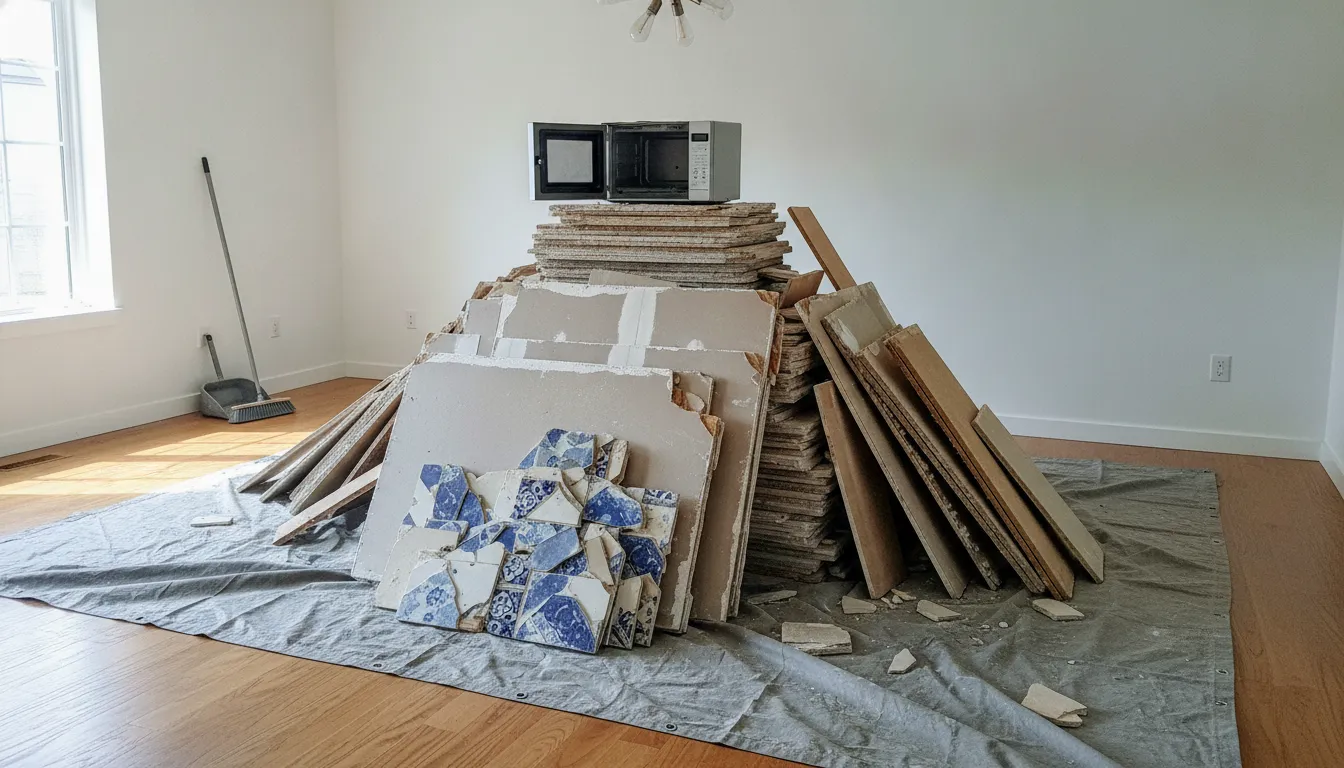
Renovation debris includes the construction and demolition materials left behind when a home project changes a room, surface, or fixture. The mix may include drywall, flooring, tile, lumber, glass, cabinets, and removed fixtures. Because each remodel combines different materials in different quantities, cleanup needs a plan rather than a one-size-fits-all disposal route.
Common Materials Left Behind
A bathroom update may leave tile, a vanity, plumbing fixtures, and broken drywall. A kitchen remodel can add cabinets, countertops, appliances, flooring, and packaging. Exterior work may produce lumber, treated wood, windows, and other bulky pieces.
- Drywall: Broken sheets and wall sections from openings, repairs, or tear-outs.
- Flooring and tile: Vinyl, laminate, carpet, hardwood, ceramic tile, and the underlayment removed beneath them.
- Lumber and treated wood: Framing scraps, trim, plywood, particle board, cabinets, and deck materials.
- Windows and glass: Removed panes, mirrors, shower doors, and glass components that need careful handling.
- Fixtures: Sinks, toilets, vanities, cabinets, light fixtures, doors, and other items replaced during the project.
Some materials are straightforward for a professional junk removal company to load and route. Others need a specific disposal decision. Treated lumber, plywood, particle board, and other wood composites are not compostable and are generally disposed of as trash, according to DSNY guidance. Vinyl and laminate flooring and tiles also generally go with trash rather than standard composting or recycling streams. Windows and mirrors may not be accepted by standard construction-waste recycling programs and can require trash disposal instead.
Why Renovation Waste Is Harder to Haul
Demolition often produces a concentrated stream of similar material. Renovation work is less predictable. One project might involve a small amount of clean flooring and several bulky fixtures. While another creates mixed piles of drywall, wood, glass, metal, and packaging across multiple rooms. The Environmental Protection Agency describes remodeling debris as a combination of construction and demolition materials, with quantities that are especially variable.
That variation affects loading, access, and disposal. Sharp edges, exposed nails, heavy pieces, and fragile glass can make a pile unsafe to move through finished rooms. Remove exposed nails when possible, and tape or double-bag broken glass before handling it, following the safety guidance in the DSNY construction debris guide. Appliances with refrigerants, paint, harsh cleaners, and other special-handling items should not be mixed into an ordinary debris load.
For a project-specific list of accepted materials, review our renovation debris removal options before the final cleanup. Vets Move Junk provides full-service loading, so homeowners do not need to lift or sort the pile themselves.
Renovation Debris Removal vs. Dumpster Rental: Which Fits Your Project?
Both options can handle a substantial remodel, but they serve different working styles. A dumpster gives you a container and time to load it yourself. Full-service hauling removes the debris for you, protects the finished path through your home, and leaves the work area broom-clean. The right choice depends on volume, access, schedule, and how much labor you want to own.
| Project consideration | Full-service debris removal | Dumpster rental |
|---|---|---|
| Who does the lifting? | Haulers carry the material from the renovation area. You point out what goes, and the team handles the loading, sorting, and haul-off. | You or your contractor load the container. That means moving drywall, flooring, cabinets, lumber, and fixtures repeatedly throughout the project. |
| Interior protection | The removal plan accounts for floors, walls, doorways, stairways, and tight hallways. Careful movement matters when finished surfaces are already in place. | The container reduces trips to a disposal facility, but you remain responsible for moving debris from the work area to the container without damaging the property. |
| Cleanup standard | Vets Move Junk provides a full-service, point-and-haul experience and leaves the cleared area broom-clean. You do not need to bundle or stage every item first. | The container is picked up after loading. Sweeping, scattered material, and any debris left outside the container remain your responsibility. |
| Timing and access | Schedule removal around the project phase, including a same-day option when available. This keeps walkways clear and limits disruption while work continues. | The container can sit on-site for the rental period, which works well when debris will accumulate steadily over several days. Delivery space and placement must be available. |
| Permits and local rules | A private, qualified hauler is the direct route for a large renovation load. Disposal requirements can vary, so material type and local standards still matter. | Depending on placement, a permit may be needed, especially if the container occupies a public street or other regulated area. Confirm requirements before delivery. |
| Best fit | Choose this route when you want no lifting, limited disruption, protected interiors, and a finished cleanup without coordinating several disposal steps. | Choose this route when you have safe container access, labor available to self-load, and a predictable stream of large-volume debris over the rental period. |
For a major renovation, volume matters, but labor and access matter just as much. Government guidance recommends arranging a private service for large amounts of renovation waste, while bulk collection programs may limit how many items can be placed out at once. Vets Move Junk brings the truck, labor, and removal plan to your California project, so the renovation can move forward without turning your driveway into a second worksite.
Full-service hauling is especially practical once cabinets, flooring, fixtures, or other finished elements are installed. Debris must pass through completed interiors and shared spaces without creating new damage. Vets Move Junk is Veteran Owned & Operated, licensed, insured, and bonded, with free onsite estimates and volume-based pricing based on the truck space used.
Sources: construction debris disposal guidance and the renovation cleanup planning reference.
How to Clear Renovation Debris Safely in a California Home
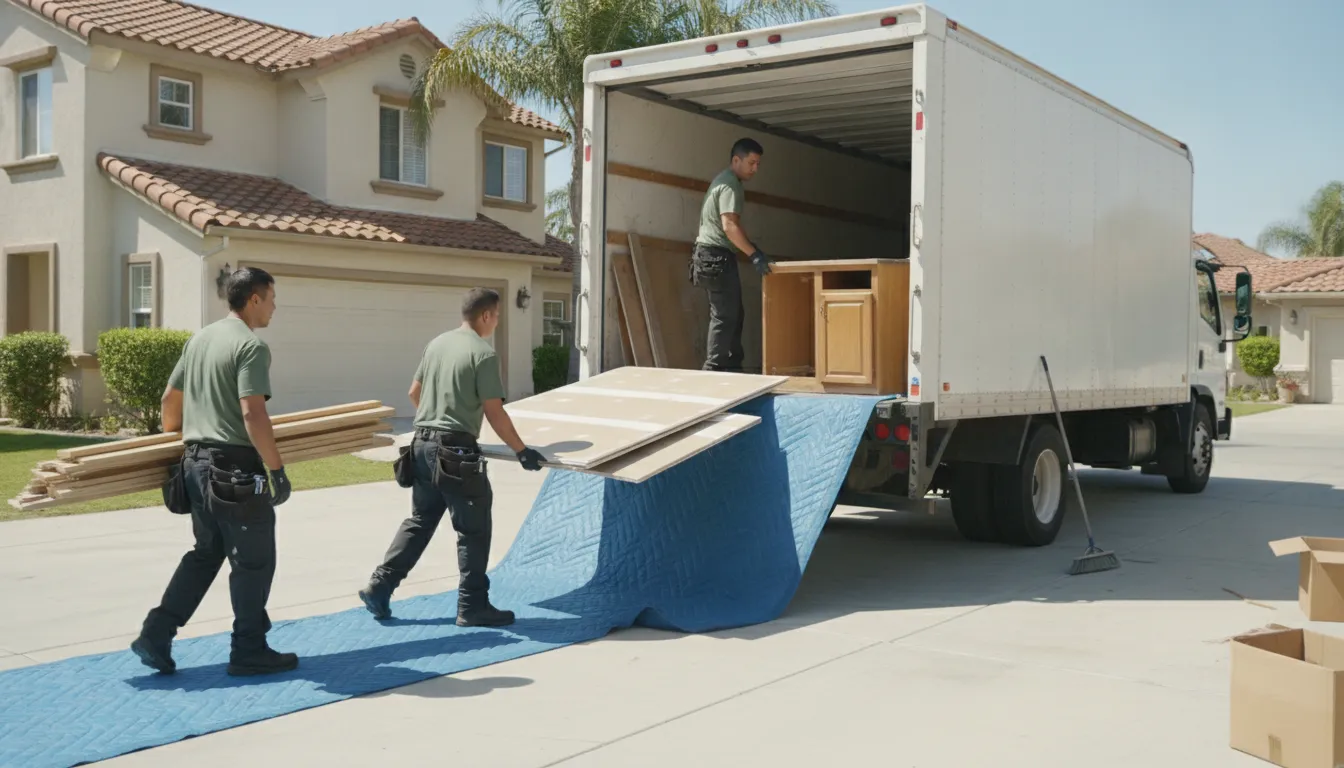
Safe cleanup starts with separating ordinary renovation debris from materials that need special handling. Keep suspected asbestos, lead-contaminated demolition materials, CFC appliances, paint, and harsh cleaners out of ordinary loads. Then remove sharp hazards and protect finished surfaces before anything travels through the home.
Hazardous Materials to Keep Out of the Curbside Bin
Demolition debris can contain more than clean lumber and drywall. The EPA notes that demolition materials may be bonded together or contaminated with hazards such as asbestos or lead paint. Do not break apart, sweep up, or load suspicious material as if it were ordinary junk. Stop work and contact a qualified hazardous-material professional for identification and removal guidance.
- Asbestos: Treat suspected asbestos as hazardous. It should never go into residential trash or a standard renovation debris load. Review disposal guidance and use an appropriately qualified specialist.
- Lead paint: Painted trim, siding, doors, and other demolition materials may be contaminated, especially in older homes. Avoid creating dust and get professional guidance before handling or hauling it.
- CFC appliances: Refrigerators, air conditioners, and other appliances containing chlorofluorocarbons require special handling. Keep them separate from construction debris instead of placing them in a mixed load.
- Paint and cleaners: Harsh cleaners, polish, paint, and similar household products may require a specialized disposal route. Keep containers closed, upright, and clearly separated while you confirm local requirements.
Protecting Your Finished Floors and Walls
Once hazardous items are set aside, prepare the remaining debris for safe movement. Renovation cleanup often crosses finished rooms, narrow hallways, staircases, and shared entryways. Plan the route before lifting so loose material does not scrape walls, gouge flooring, or block an exit.
- Remove nails: Pull exposed nails, screws, staples, and other sharp objects from boards and bundled materials before handling them.
- Secure glass: Tape large glass pieces and mirrors. Double-bag broken glass so shards cannot cut someone handling the load. Windows and mirrors may not belong in standard construction recycling programs.
- Protect surfaces: Cover finished floors, pad doorframes, and keep debris away from painted walls. Move bulky pieces slowly through planned paths rather than dragging them.
- Keep access clear: Stage debris in a stable area that does not obstruct walkways, stairs, exits, or active work zones.
When the volume is too large or the route is tight, a professional junk removal team can assess access points. Protect the interior, and haul eligible debris without asking homeowners to do the heavy lifting or sorting.
What Should Renovation Debris Removal Cost After a Remodel?
Renovation debris removal usually costs according to the volume your materials occupy, not a fixed price for each piece of drywall, flooring, cabinet, or fixture. A free on-site estimate gives you a clear price before hauling begins, while a volume-based model lets you pay only for the truck space your project uses.
Why volume matters more than individual items
A remodel can create a small pile of flooring and trim or a full load of cabinets, lumber, drywall, and fixtures. The number of items alone does not tell you how much truck space they require. Bulky cabinets may fill a vehicle faster than a larger quantity of compact debris. Access, stairs, and the need to protect finished floors can also affect the work involved.
That is why Vets Move Junk does not publish a fixed price for every renovation item. The team reviews the debris on site, confirms the amount of space needed, and gives a firm estimate before the job starts. You do not pay an hourly rate or guess how much room your debris will take.
Industry ranges are context, not a Vets Move Junk quote
As broad national context, one construction-debris pricing guide reports removal costs from about $200 to $800. Many homeowners pay $450 to $600 for a 14-cubic-yard truckload. Those figures are not a quote or promise for a California project. Market, material type, access, load size, and disposal requirements can all change the final cost. See the pricing for junk removal page for the company’s volume-based approach.
What your estimate should include
- Volume: The portion of truck space your debris occupies.
- Labor: Loading, lifting, sorting as appropriate, and hauling, with no heavy preparation required from you.
- Access: The path through doors, hallways, stairs, and finished areas.
- Clarity: A firm estimate before work begins, so there are no surprises after the truck is loaded.
For major renovations, removal may be scheduled as debris accumulates or after the final phase. Either way, an on-site review keeps the estimate tied to the actual job. Request a free estimate, point out what needs to go, and let the team handle the haul-away and broom-clean finish.
Ready to move on from cleanup? Get a free estimate on the junk removal pricing page and book the haul-away that fits your remodel.
When to Hire a Professional for Post-Renovation Cleanup
DIY curbside removal can work for a small project with a few manageable items and a clear disposal route. Hire a professional when debris fills a room, blocks access, must move through finished interiors, or needs careful handling under local disposal standards. A full-service crew leaves the property ready for use, inspection, or listing.
Signs Your Cleanup Needs a Full-Service Crew
Start with the volume and the path out of the home. Major renovations can generate large, unpredictable amounts of construction and demolition debris, making a few curbside trips inefficient. Professional removal is the better fit when the load includes bulky materials, multiple rooms, stairs, narrow hallways, or freshly finished floors and doorways.
- Large volume: A full remodel, flooring replacement, kitchen update, or property cleanout can quickly exceed what a homeowner can safely load and transport. Major renovation projects with substantial waste call for a private removal solution rather than scattered curbside attempts. Local disposal guidance also distinguishes small DIY work from larger construction and renovation projects.
- Finished interiors: High-volume cleanup requires planning access points and safe paths through rooms, stairways, tight hallways, and shared spaces. That planning helps protect floors, walls, and doorways while bulky debris is carried out.
- Disposal complexity: Renovation materials do not all follow the same route. Professional hauling supports proper handling under local disposal standards, reducing the chance of an unsafe or noncompliant load. Suspected asbestos, lead-painted materials, appliances requiring special handling, paint, or harsh cleaners need separate guidance, not a standard debris pile.
- Time pressure: If an inspection, listing, move-in, or final project walkthrough is approaching, repeated trips can keep the property out of service. A structured cleanup clears the work area and helps leave the space ready for its next use.
What Full-Service Renovation Debris Removal Includes
Vets Move Junk handles the labor from start to finish. Point to what needs to go, and the team takes care of the lifting, loading, and sorting. You do not need to stage every item at the curb or separate the load before arrival. The team works toward a broom-clean finish, with two-hour arrival windows and same-day availability when scheduling allows.
Vets Move Junk is licensed, insured, and bonded. As a Veteran Owned & Operated company, it brings a precise, organized approach to post-renovation cleanup. The service area includes local California communities listed on the areas we serve page.
Keep DIY removal for small, safe, easily manageable loads. When the debris is heavy, widespread, time-sensitive, or difficult to move through a finished home. Professional renovation debris removal saves labor and protects the result you just paid to create.
Rather than spending a weekend hauling heavy loads, let a full-service crew take it from start to finish. Point to what goes, and the team loads, sorts, and hauls it away, leaving you free to enjoy the finished space.
Schedule a free onsite estimate and let Vets Move Junk haul away the post-renovation debris. Book online and get a firm price before we start.
Frequently Asked Questions
What items count as renovation debris?
Renovation debris can include drywall, lumber, plywood, flooring, tile, windows, mirrors, cabinets, fixtures, and appliances removed during a remodel. The mix changes from project to project, so a clear list or on-site review helps determine the safest removal plan. Treated wood, vinyl flooring, laminate, and some glass items may require specific disposal handling rather than ordinary household collection. EPA construction and demolition guidance describes renovation debris as highly variable.
Can I put remodeling debris at the curb?
Do not assume a regular curbside pickup will accept construction materials. Local programs can limit the number, size, and type of items collected, while contractor-generated construction and demolition debris may be excluded from residential garbage service. Check your local rules before setting anything out. For a larger remodel, a private debris removal service or dumpster arrangement is usually more practical than repeated curbside trips.
What renovation materials need special handling?
Stop and get qualified guidance before moving suspected asbestos, lead-painted materials, hazardous cleaners, paint, or appliances that contain CFCs. These materials should not be mixed with standard renovation debris. Remove exposed nails and secure sharp or broken glass before a scheduled pickup when it is safe to do so. Construction debris guidance from NYC DSNY identifies asbestos, harmful household products, CFC appliances, and sharp materials as requiring added care.
How does full-service debris removal work after a remodel?
Vets Move Junk reviews the debris volume and access, provides a free on-site estimate, then handles the lifting, loading, and haul-away. Homeowners do not need to sort or carry heavy materials. The team works through finished interiors carefully and leaves the area broom-clean. Volume-based pricing means the estimate reflects the truck space used, not an hourly rate.
Ready to schedule your post-renovation cleanup?
A clear work area makes the next step of your home project easier. Vets Move Junk can review the debris, explain the estimate, and handle the haul-away work so you are not left sorting and lifting it yourself.
Schedule a free onsite estimate through our online booking form.