To get a quote for business junk removal in California, prepare a practical list of what must go, where it is located, how the crew will access it, and when the work needs to happen. Vets Move Junk can then assess the volume and job conditions onsite and provide an estimate based on the actual scope.
Get a Free Onsite Estimate for Your Business Junk Removal Project
Start With the Business Problem, Not Just a Pile of Items
A commercial removal quote is more useful when it is connected to the outcome your business needs. A property manager may need a suite cleared for a new tenant. A retailer may need old fixtures removed after a remodel. An office may need furniture and equipment gone before a move. A warehouse may need space cleared while docks and aisles remain operational.
State the business reason in one sentence when you request an estimate. For example: “We need the back storage room cleared before our next delivery,” or “We need the former office suite ready for turnover by the end of the month.” This gives the provider context for the schedule, access plan, and order of work.
Vets Move Junk provides full-service removal for businesses across California. The team can handle eligible items from the agreed scope, load them, remove them, and clean the work area so employees do not have to organize a separate hauling step. The company is Veteran Owned & Operated, licensed, insured, and bonded, with a price-match guarantee for a written estimate from a licensed, insured, and bonded competitor.
What Information Should You Include in a Business Junk Removal Quote Request?
A business junk removal quote request should include the service address, a description of the items, the areas involved, access conditions, desired timing, and any restrictions. The more clearly you describe the project, the easier it is for the provider to determine whether an onsite visit needs special preparation.
Use the checklist below as a starting point. You do not need a perfect inventory or a staged workspace before asking for an estimate. The goal is to identify the conditions that could change the scope of loading and removal.
| Quote detail | What to share | Why it matters |
|---|---|---|
| Business location | Address, suite, floor, and city | Confirms the service area and helps plan the visit |
| Item inventory | Furniture, fixtures, equipment, boxes, pallets, or debris | Clarifies the likely load mix and removal scope |
| Access | Parking, loading dock, gate, elevator, stairs, and long carries | Helps coordinate a safe and efficient loading path |
| Schedule | Preferred dates, business hours, deadlines, and blackout periods | Reduces disruption and supports turnover planning |
| Restrictions | Items that must stay, restricted rooms, security rules, or approvals | Keeps the crew focused on authorized material |
List items by category
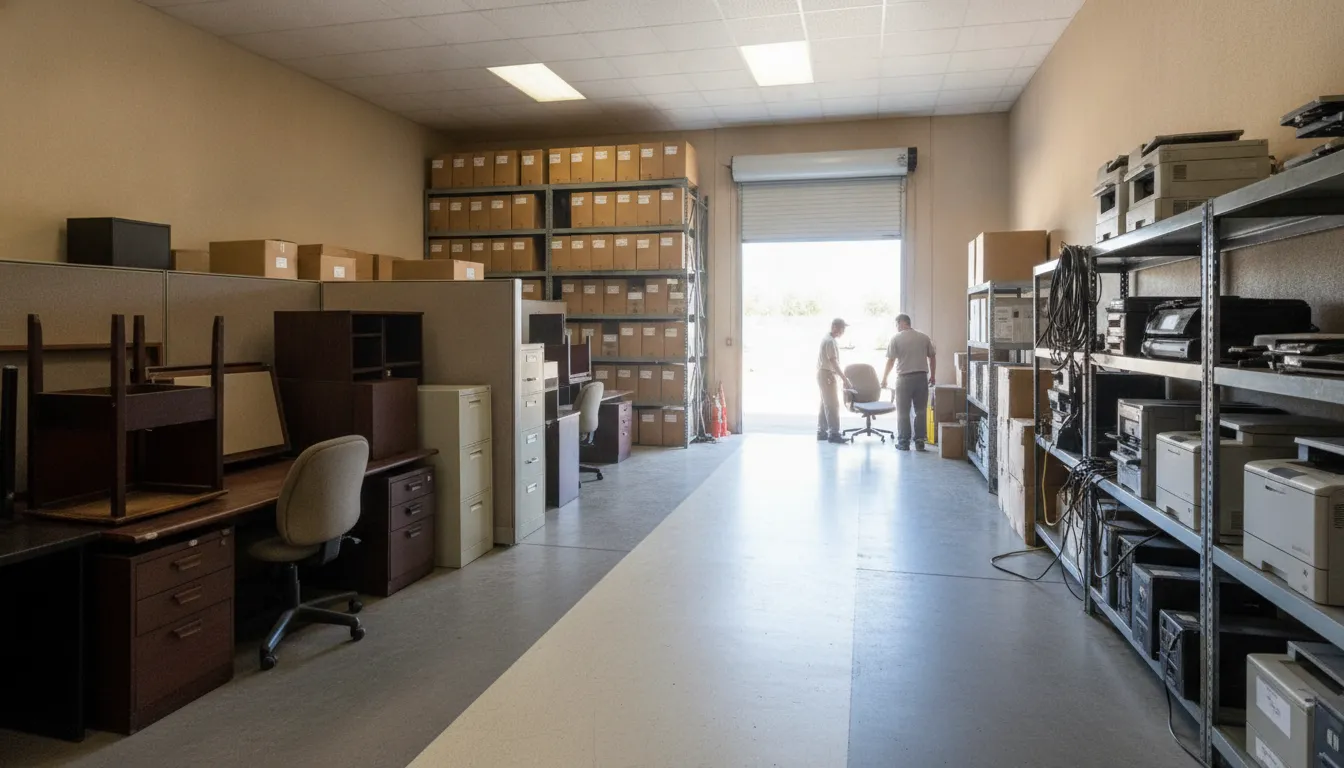
Group the material instead of trying to count every individual item. Useful categories include desks and chairs, cubicles and partitions, shelving, file cabinets, retail fixtures, appliances, boxed records, pallets, packaging, old inventory, and non-hazardous equipment. Add approximate quantities when you can, such as “six desks and twelve chairs” or “one storage room of mixed shelving and boxes.” Photos can help explain the scope, especially when items are stacked or spread across several rooms.
If the project includes electronics, appliances, paint, chemicals, medical materials, batteries, or other items with special handling requirements, identify them early. Do not place questionable materials in a general removal pile. Ask the provider whether the item is accepted and whether a qualified specialty service is needed.
How Does Loading Access Affect a Commercial Removal Estimate?
Loading access affects the time, crew movement, and equipment planning required for a commercial junk removal project. A ground-level room next to a clear loading area is different from a high-rise suite with a reserved freight elevator, a warehouse with a scheduled dock, or a retail location with customer traffic at the front entrance.
Describe the route from item to truck
When requesting an estimate, explain how the crew would move the material from its current location to the truck. Mention loading docks, alleys, parking rules, elevators, stairs, narrow hallways, security desks, gates, and doors that require an access code or building contact. If the route changes during business hours, share that detail as well.
For multi-tenant buildings, ask the property manager about loading reservations, elevator protection, certificates of insurance, dock windows, and any vendor check-in process. The removal provider can confirm which requirements it can accommodate before the appointment. This prevents a crew from arriving at a property where the loading path is unavailable.
Separate access details from item details
Two businesses can have a similar inventory but very different removal conditions. One may have direct dock access. Another may require a long carry through an occupied lobby. Put access notes in their own section of your request so they are not buried inside the item list.
Vets Move Junk uses onsite estimates to evaluate the actual volume and conditions. Its full-service model means the customer can point out the approved items while the team handles the loading and removal. You can review the company’s items and services information before the visit and flag anything that needs confirmation.
Which Business Hours and Deadlines Should You Share?
Tell the provider when the business is open, when employees or customers are present, and when loading is restricted. A removal can often be planned around a quieter period, but that requires accurate information at the start.
- Operating hours: Note when employees, residents, customers, or vendors are on site.
- Preferred service window: Share the days and times that create the least disruption.
- Building restrictions: Include dock hours, elevator reservations, security check-in, and property rules.
- Hard deadline: Explain the date tied to a move, lease turnover, inspection, delivery, renovation, or opening.
- Blackout periods: Identify meetings, deliveries, sales events, tenant access, or other times when loading cannot occur.
A deadline should be specific, but it should not be treated as a promise of availability until the appointment is confirmed. If the project is flexible, say so. If the removal must happen before a contractor arrives, state the sequence clearly so the estimate and schedule can be coordinated with the rest of the project.
Businesses in the Bay Area, San Diego County, Orange County, and selected Los Angeles County communities can review the Vets Move Junk service locations before submitting a request. The company offers online scheduling and convenient two-hour arrival windows, subject to availability and service-area confirmation.
What Documents and Approvals May Be Needed?
Documentation helps prevent delays when a commercial property has multiple decision-makers or strict building procedures. The person requesting the quote should be able to identify the business, the service address, and the items authorized for removal. The removal crew should not be asked to decide whether an item belongs to a tenant, landlord, employee, or another department.
Prepare the documents that apply to your site
- Property contact: Name and contact details for the person who can provide access.
- Removal authorization: Written confirmation from the owner, tenant, property manager, or department head when required.
- Building rules: Vendor instructions, dock reservations, elevator rules, parking permits, and security procedures.
- Item exclusions: A short list of equipment, files, fixtures, or personal property that must remain.
- Timing documents: Lease turnover dates, move schedules, contractor sequencing, or inspection deadlines.
Do not include sensitive customer records, passwords, financial documents, or confidential files in a photo or email unless your company has approved that method. If paper archives are part of the project, confirm the business’s retention and secure-destruction requirements before listing them for removal. Vets Move Junk can discuss whether the material fits the requested service, but the business remains responsible for authorizing the disposal of its records and property.
How Is a Business Junk Removal Quote Calculated?
A business junk removal estimate depends on the amount and type of material, the loading conditions, the service location, and the work required to complete the job. Vets Move Junk uses volume-based pricing tied to truck space rather than hourly billing. The onsite assessment helps the team evaluate the actual scope before removal begins.
There is no useful universal business junk removal price because a partial office pickup, a mixed retail fixture removal, and a warehouse reset can have very different volumes and access requirements. A responsible quote should reflect the project being assessed, not a generic number copied from another job.
Vets Move Junk describes its pricing as all-inclusive for the agreed service, covering labor, transportation, disposal-related costs, and cleanup. Review the junk removal pricing guide for the company’s volume-based approach, then request an onsite estimate when you are ready to discuss your specific project.
Plan Your Business Pickup With a Free Onsite Estimate
What to compare when reviewing estimates
Compare the scope and conditions, not just the headline number. Ask whether the estimate includes loading, removal, transportation, disposal-related costs, cleanup, stairs, elevators, long carries, disassembly, or other clearly identified work. Confirm what happens if the inventory changes before the appointment and whether the provider has any item restrictions.
Vets Move Junk also offers a price-match guarantee against a written estimate from a licensed, insured, and bonded competitor. If you use that option, keep the comparison between equivalent scopes and verified providers. A lower quote that excludes loading, cleanup, or access requirements may not represent the same service.
What Happens After You Request the Quote?
After you submit a request, the next step is to confirm the address, scope, access, and timing with the removal provider. A straightforward business junk removal process typically follows these stages:
- Describe the project: Share the business address, inventory categories, access route, restrictions, and desired timing.
- Schedule an assessment: Choose an available appointment window and make sure the site contact knows how to provide access.
- Review the scope onsite: Point out what should go, what must stay, and any conditions that affect loading.
- Review the estimate: Confirm what the proposed service includes and ask questions before approving the removal.
- Approve the work: If the scope and estimate fit your needs, authorize the team to proceed and coordinate any building requirements.
- Complete the handoff: The crew loads the approved material, removes it, and cleans the area included in the service.
For a partial project, mark the removal boundary clearly. For a full business cleanout, identify rooms, storage areas, loading zones, and outdoor sections in the order the crew should address them. A simple floor plan, labeled photo set, or room-by-room list can reduce confusion without requiring the business to move heavy items first.
This quote-request workflow is different from a general commercial junk removal overview. The purpose here is to help a business prepare a decision-ready request. For office-specific planning, see the commercial office cleanout guide. For warehouse operations, use the separate warehouse planning content so the broader facility and safety considerations are not lost.
Frequently Asked Questions
How do I get a quote for business junk removal?
Start by sharing your business address, item categories, access conditions, preferred timing, and any removal restrictions. Vets Move Junk can review the project onsite, assess the actual volume and job conditions, and provide a volume-based estimate. You can request a free onsite estimate through the online booking page without committing to removal before reviewing the scope.
What should I send with a commercial junk removal quote request?
Send a concise inventory, photos when helpful, the loading route, business hours, deadline, service address, and building requirements. Include the name of the person who can authorize removal and identify items that must remain. Avoid sending confidential records or sensitive information unless your company’s approved process permits it.
Does a business need to move everything before the estimate?
No. A business does not need to move or load everything before requesting an estimate. The provider needs enough information to understand the volume and conditions, and the onsite visit can clarify the final scope. Keep items that should be removed distinguishable from items that must stay.
How is commercial junk removal pricing determined?
Commercial junk removal pricing is determined by the volume and type of material, access conditions, service location, and job scope. Vets Move Junk uses truck space and the assessed conditions rather than an hourly quote or a fixed published price. The onsite estimate is the best way to discuss the actual project.
Can junk removal happen outside normal business hours?
It may be possible to schedule service around business hours, subject to provider and building availability. Tell the provider about preferred windows, delivery schedules, security rules, elevator reservations, and blackout periods. Confirm the appointment rather than assuming a particular time is available.
What if the business needs recurring junk removal?
Explain the expected frequency, typical material, service locations, access process, and preferred schedule when requesting the quote. Recurring needs may involve a different planning conversation from a one-time cleanout. Vets Move Junk can review the requested scope and determine the appropriate next step for the business.
Request Your Free Onsite Estimate for Business Junk Removal
Clear information makes a commercial quote easier to evaluate and easier to schedule. Prepare the inventory, access route, operating constraints, deadline, and approvals, then let the onsite assessment connect those details to the actual removal scope. When your California business is ready, Vets Move Junk can help you take the next step through the online booking page.