How to dispose of treated wood depends on the treatment, the amount, and the rules at the facility that will receive it. Do not assume it belongs with clean lumber, yard trimmings, or ordinary household items. Identify it if you can, keep it separate, and check local instructions before hauling it anywhere.
What counts as treated wood?
Treated wood is lumber that has been given a preservative to help it resist decay, insects, or outdoor exposure. It is commonly found in older decks, fences, landscape borders, utility structures, and other projects where lumber has been exposed to moisture or soil. The treatment is not always visible. Some boards are greenish or brown, but color and age alone do not confirm what a board contains.
Look for a tag, stamp, label, receipt, or project record before you make a disposal plan. If a board came from a recent project, ask the installer or supplier what treatment it has. If you cannot identify it, treat it cautiously: do not mix it with clean, untreated lumber, and do not present it to a facility as ordinary wood. A facility or local program can tell you what information it needs.
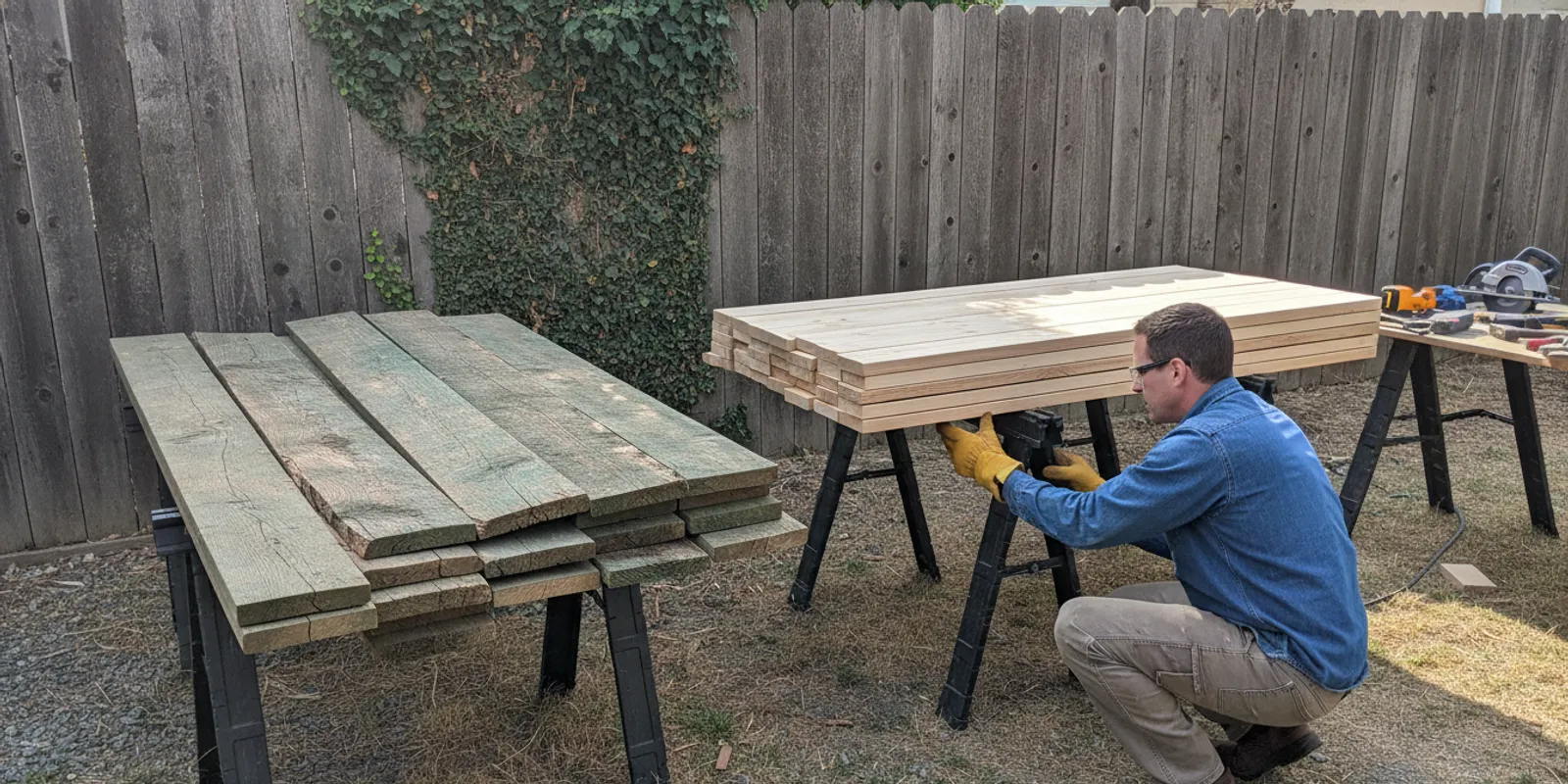
Also separate treated lumber from other materials in a renovation pile. A load may contain clean wood, painted or coated wood, treated boards, nails, concrete, and soil. Sorting these groups makes it easier to ask the right questions and reduces the chance that a receiving facility turns the load away.
Why should you check the rules before hauling it?
There is no single drop-off rule that applies to every California community, every treatment, and every amount. A location may accept a limited quantity in one way but have different rules for a larger load. Another facility may not accept treated lumber at all. Some local agencies provide separate instructions for treated wood, while others direct residents to a permitted facility or another local program.
For example, San José Recycles says treated wood cannot go in its carts or bins and is not accepted at the city’s household hazardous waste facility. That is a useful reminder to check the rules where you live, not a statewide instruction for every California city. The National Pesticide Information Center also advises people with treated wood to contact their local or state waste program; it warns that chipping or composting treated wood can release harmful chemicals into the environment. Review San José’s treated-wood guidance and read the National Pesticide Information Center’s disposal guidance as examples, then confirm instructions for your own address.
Call or check the receiving facility’s current web page before loading a vehicle. Ask about acceptance, limits, preparation, hours, and whether an appointment is needed. Rules and operating details can change. A facility’s general page about wood or construction debris may not cover treated boards, so use the phrase “treated wood” when you ask.
What should you do before choosing a disposal route?
- Identify the source. Note where the lumber came from, when it was installed if known, and any label or treatment information. Take a clear photo of a stamp or tag so you can describe it during a call.
- Estimate the amount. Count boards or estimate the pile’s length, width, and height. Separate a few boards from a deck or fence tear-down from a stack that fills a pickup bed or a larger renovation pile.
- Sort the material. Keep treated wood apart from clean lumber, green waste, soil, metal, and other debris. If boards have nails or attached hardware, mention that when checking the facility’s preparation requirements.
- Check local acceptance. Ask your city or county program and the destination facility which route is allowed. Confirm any limits and whether the wood must be kept intact.
- Plan safe handling and transport. Decide how the lumber will be lifted, secured, and moved without dropping debris or exposing people to dust.
This small amount of preparation can save a wasted trip. It also helps a facility give you a relevant answer rather than a general response about wood products. If you are clearing a property, it can help to make one inventory of all the items involved; the company’s items and service information is a useful starting point for questions about what to describe when requesting an estimate. Do not assume a particular material is accepted until the service provider confirms it.
Which route may fit the amount of treated wood?
| Situation | Route to check first | What to confirm |
|---|---|---|
| A few boards from a small repair | Local city or county guidance and a nearby authorized receiving site | Whether treated lumber is accepted in that quantity and how it must be presented |
| Several boards or a small project pile | A facility that specifically confirms it takes the material | Quantity limits, vehicle or unloading rules, hours, and any appointment requirement |
| Deck, fence, or renovation debris | Ask a permitted facility or removal provider about the whole separated load | Whether treated lumber can be handled with the other debris or must stay separate |
| Large, heavy, or hard-to-access pile | Request an estimate from a removal service after confirming material acceptance | Access, lifting needs, load size, and whether the provider can take this specific wood |
The table is a planning guide, not a guarantee that a particular facility or service accepts your load. Acceptance can depend on local policy and the details of the material. Confirm before you drive, book, or begin dismantling a structure.
Can you put treated wood in a household bin or curbside pile?
Do not place treated wood in a cart, curbside pile, or ordinary collection container unless your local program specifically says it is allowed. Collection rules are local, and treating a board as ordinary yard material can lead to a rejected pickup or a load sent to the wrong destination. San José’s rules, for instance, exclude treated wood from its carts and household hazardous waste facility, but another community may provide different directions.
Ask the city or county program what to do with the exact kind and amount you have. If it gives you a list of accepted materials, look for treated wood by name rather than relying on a broad category such as “wood” or “bulky items.” If you cannot find a clear answer, use the local agency’s contact channel and describe the board, where it was used, and how much you have. Keep its response handy when arranging transport.
Can you burn, chip, compost, or reuse treated lumber?
Do not burn treated wood in a fireplace, fire pit, stove, or outdoor pile. Burning can create hazardous smoke and ash. Do not chip or compost treated boards or put them into mulch. The National Pesticide Information Center specifically cautions that chipping or composting may release chemicals into the environment. Follow the agency or facility instructions for your area instead of trying to make the material smaller for a garden or compost pile.
Reuse is not automatically a disposal solution either. A board should not be repurposed for a new project just because it is still solid. First identify the material and check reliable guidance for the intended use. Do not use uncertain treated lumber where people may regularly touch it, around food-growing areas, or in a way that creates sawdust. If you need to cut or dismantle it, plan that work carefully and check whether the receiving facility requires a particular size or form.
Some treated wood may be accepted by a permitted facility under specific conditions. Do not infer that a facility accepts your material just because it handles construction debris or has industrial processing equipment. Confirm the treatment and destination with the facility or local program.
How can you handle and transport treated boards more carefully?
Whenever possible, avoid unnecessary cutting, sanding, drilling, or other work that creates dust. If the job requires handling rough or dusty lumber, wear work gloves and avoid touching your face while working. Keep children and pets away from the pile. Wash your hands after handling the boards, and clean any reusable tools or work area using instructions from a reliable local safety source.
For a small amount that local rules allow you to transport, stack boards so they cannot slide or extend unsafely from the vehicle. Secure the load, protect yourself from sharp fasteners, and avoid carrying more than you can safely lift. Do not mix treated boards into a load of clean lumber just to simplify the trip. If the facility requires separation, keep the groups apart during transport and unloading.
For a demolition or renovation job, settle the handling plan before work starts. Tell the contractor that the structure may contain treated wood and ask how the material will be identified, separated, and taken to a confirmed destination. If you are doing the work yourself and the quantity is more than you can move safely, pause and arrange appropriate help instead of improvising with an overloaded vehicle.
When does a professional pickup make sense?
A professional pickup may be useful when the pile is bulky, awkward to lift, spread across a property, or part of a larger cleanout. It can also help when you do not have a suitable vehicle or cannot safely load and secure the boards. The practical question is not only who can carry the wood; it is whether the provider can accept this particular material and what destination or handling requirements apply.
Before you book, share what you know about the treatment, where the boards came from, their approximate quantity, and whether they are mixed with other debris. Send photos if the provider offers a way to do so. Ask directly whether it can take treated wood from your location, how it will be handled, and whether mixed materials need to be separated. If the provider cannot confirm, check with your local program for an appropriate option.
For a property with multiple items, make a clear list instead of describing everything as a single pile. Separate treated boards from furniture, appliances, clean lumber, and other materials. The junk removal FAQ can help you prepare general service questions, while the service area information lets you check where the company operates. Vets Move Junk serves residential and commercial customers in San Diego, Orange County, and the East Bay; acceptance of treated wood should still be confirmed for the specific job.
If a removal estimate is appropriate, provide the full list and the access details. Mention stairs, gates, distance from the pickup point, and whether the lumber is already detached. The estimate should be based on what the crew can see and what the provider confirms it can handle, not on an assumption that every type of wood is included. You can learn more about the general process in this junk hauling guide.
What details should you have ready when you call?
A useful call starts with clear information rather than a guess about the correct disposal category. Tell the agency or facility that the boards may be treated, describe where they were used, and share any stamp, label, or project record you found. If you do not know the treatment, say so. Do not identify the lumber as untreated just because it looks like ordinary wood.
Next, describe the quantity in practical terms. The number of boards, their approximate length, and a photo of the stack can help the person answering understand the scale. Explain whether the material is loose, attached to a structure, or mixed with other debris. Ask whether the site accepts that material, whether the amount is within its limit, and whether there are special hours, appointment steps, or loading instructions.
Write down the answer and the name of the facility or program you contacted. If you receive a referral, confirm directly with the destination that it accepts the material; a general referral does not always confirm a specific load. If information on a web page conflicts with what you were told, ask which instruction is current before making a trip. The same preparation helps when asking a removal provider whether your treated wood is within its service scope.
How should you compare a facility trip with a pickup estimate?
Compare the full effort, not just the distance to a drop-off site. A facility trip may require sorting, loading, securing the lumber, driving, unloading, and making another trip if the amount exceeds a limit. A pickup estimate may save you from handling and transport, but only if the service confirms the material and pickup details. Both routes require checking the final destination rules.
Use these questions to compare options:
- Has the receiving facility confirmed it accepts the specific treated wood and this approximate quantity?
- Do you have a safe way to detach, lift, and secure the boards?
- Is the lumber mixed with clean wood, construction debris, soil, or other materials that need separate handling?
- Would a provider be able to access the pile without moving other items or risking damage to the property?
- Can the provider confirm that the material is within its service scope before you schedule?
If you request a service estimate, make sure the scope is clear before pickup. A volume-based estimate depends on the amount and type of material being removed, and the crew needs accurate information to assess the load. Vets Move Junk explains its general junk removal service online; for a specific treated-wood pile, ask for confirmation rather than assuming acceptance. The company’s about page provides more information about the business.
What are common mistakes to avoid?
- Assuming all wood is alike. Treated lumber should be identified and separated from clean wood until the receiving route is confirmed.
- Relying on color alone. Appearance cannot reliably establish treatment. Look for records or ask a knowledgeable source.
- Taking it to the first facility you find. A facility that accepts some wood or construction debris may not accept treated boards.
- Burning, chipping, or composting it. These actions can spread contaminants or create exposure risks; follow local instructions.
- Loading before checking quantity limits. A rejected load can mean extra handling, travel, and delay.
- Leaving the material in a public area. Keep it secured on your property while you arrange an approved route.
- Failing to describe mixed debris. Tell the facility or service provider what else is in the pile, not just that it is lumber.
A careful plan is usually straightforward: identify what you can, separate the boards, confirm local rules, then choose a route that fits the amount and your ability to move it safely.
Frequently Asked Questions
Is treated wood hazardous waste in California?
Do not assume it belongs in a household hazardous waste facility or in ordinary trash. Local agencies and receiving facilities set instructions for the material and amount. Contact your city or county program and confirm an acceptable destination before transporting it.
Can I put pressure-treated wood in my regular trash?
Only do so if your local program expressly allows it for your material and quantity. Rules differ by location. Check the current guidance for your address instead of relying on another city’s policy or a general rule of thumb.
Can treated wood go in a green-waste or compost container?
Do not put it in compost, mulch, or green-waste collection unless your local authority explicitly directs you to do so. The National Pesticide Information Center warns that chipping or composting treated wood can release chemicals into the environment.
Should I remove nails before taking treated lumber to a facility?
Ask the destination facility what preparation it requires. Some facilities may have rules about attached hardware, board size, or how material is unloaded. Do not spend time cutting or dismantling the wood until you know what the facility accepts and what is safe for you to handle.
Can a junk removal service take treated wood?
That depends on the provider, the material, and its handling requirements. Before scheduling, describe the wood and amount, share photos if possible, and ask for explicit confirmation that the provider can accept it. If it cannot, ask your local agency which destination to use.
When in doubt, keep treated wood separate and ask your local program or the receiving facility for current instructions before moving it. That simple check helps you choose a safer, more reliable route for the lumber you actually have.