
Tire Recycling in California: What to Do With Old Tires
Old tires are too bulky for most household trash programs. Do not leave them beside a curb, dump them in an empty lot, or store them indefinitely behind a garage. In California, the right tire recycling or removal option depends on tire type, quantity, location, and safe transport. This guide explains what to check before calling a local program or professional hauler.
Get a free onsite estimate for old tire removal
What Is the Best Way to Recycle Old Tires in California?
The best option is the one that accepts your tire type and quantity, explains where the tires will go, and gives you a safe way to complete the handoff. Start with the tire retailer or installer, a city or county recycling program, or CalRecycle’s registered-hauler resources. For a pickup at your property, confirm the service scope and request an estimate before loading begins.
There is no single statewide drop-off rule that works for every household. A local program may accept only passenger tires, cap the number per visit, require tires to be off the rims, or serve residents of a particular city. A retailer may accept old tires when you buy replacements, while a transfer station may charge a separate tire-handling fee. Those details can change, so call ahead rather than assuming that a site listed online will take your load.
For a California-specific starting point, use CalRecycle’s Tire Management resources. The state program also provides a searchable list of organizations that recover unwanted tires. These resources can help you distinguish a legitimate tire-management option from an informal offer with no clear destination.
Why Should You Keep Tires Out of Ordinary Household Trash?
Whole tires can create handling, storage, and environmental problems when they are placed in ordinary household trash or abandoned outdoors. They are difficult to compact, can trap water that attracts mosquitoes, and can contribute to dangerous stockpiles. Keeping tires separate lets the receiving program use the correct equipment and route them through a permitted management process.
- Many curbside carts and ordinary trash services do not accept whole tires.
- Tires can damage sorting or compacting equipment when they enter the wrong waste stream.
- Outdoor piles can collect water and create a public-health concern.
- Large tire piles can present a serious fire and cleanup risk.
- Illegal dumping leaves the property owner or community responsible for removal.
California’s tire program exists because used and waste tires require more controlled handling than ordinary bagged trash. CalRecycle explains that the state generates tens of millions of reusable and waste tires and regulates tire haulers, facilities, and storage. That does not mean every tire will become a new tire. It means the load should be handed to a business or program that is equipped to manage it responsibly.
How Do You Prepare Tires for Recycling or Pickup?
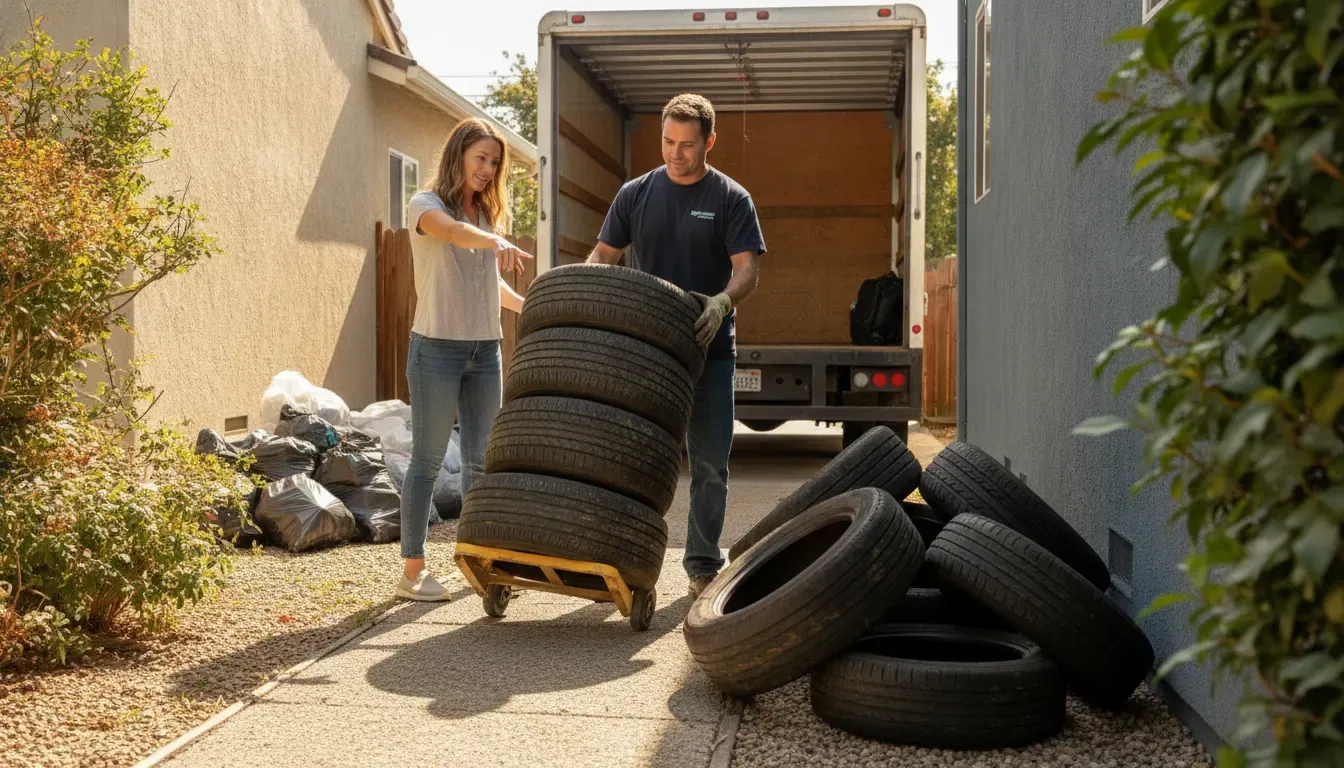
Preparation is simple: count the tires, identify their size and condition, check whether rims are attached, and make the load easy to inspect. Before scheduling a drop-off or pickup, move loose items away from the tires and take a few clear photos if a provider offers a remote estimate. Do not cut, burn, bury, or alter tires to make them fit a bin.
- Count the load. Write down the number of passenger, light-truck, motorcycle, trailer, or specialty tires.
- Check the rims. Note whether tires are still mounted. Some programs accept mounted tires, while others require removal from the rim.
- Separate other material. Keep tubes, wheels, batteries, oil, loose auto parts, and household trash separate unless the provider confirms they are included.
- Keep tires dry and accessible. Store them off the street and away from drains, standing water, and areas where children can climb on them.
- Photograph unusual loads. Photos can show size, condition, stairs, gates, and the distance from the tire pile to the truck.
- Ask about restrictions. Confirm maximum quantity, acceptable tire types, hours, fees, residency rules, and whether appointments are required.
If you are preparing a larger junk-removal project along with old tires, the junk removal preparation checklist can help you organize the access route and items before the crew arrives.
Does the Number of Tires Change the California Disposal Process?
Yes. Quantity can change which provider you may use and what paperwork or transport rules apply. A household with a few passenger tires may qualify for a local drop-off or retailer take-back, while a larger load may need a registered waste-tire hauler or a company that works with one. Always ask the receiving organization about its current limit.
| Load situation | What to check first | Practical next step |
|---|---|---|
| One to a few passenger tires. | Retailer take-back, local drop-off limits, and rim requirements. | Call the tire store or local waste program before you drive over. |
| A full set from a home garage. | Maximum tires per household, appointment rules, and safe vehicle capacity. | Compare a local program with an onsite pickup estimate. |
| Ten or more tires. | California hauler registration and manifest requirements. | Use a registered hauler or ask the provider how its compliant transport is arranged. |
| Oversized, commercial, or specialty tires. | Accepted tire dimensions, business rules, and facility capability. | Describe the tires and destination before scheduling service. |
CalRecycle states that anyone transporting 10 or more used or waste tires on California public roads must be registered as a waste-tire hauler, with limited exceptions. The Used and Waste Tire Haulers page explains the state’s registration and manifest framework. Homeowners do not need to become haulers to get rid of a few tires, but a large or business-generated load deserves extra attention to who transports it and where it is delivered.
What Should You Check Before Choosing a Tire Recycling or Hauling Option?
A legitimate option should be specific about acceptance, pricing method, scheduling, and destination. Ask which tire types are included and whether rims or other auto parts are accepted. Ask who will load the tires and whether the provider is a retailer, public program, facility, or registered hauler. Vague promises to “make the tires disappear” are a reason to keep looking.
Use this quick screening list:
- Confirm the service area. Municipal programs may be limited to residents, while private providers may serve only selected California markets.
- Confirm the quantity. Ask about household limits, business loads, and what happens if the actual count differs from your estimate.
- Confirm the tire type. Passenger and light-truck tires are not automatically treated the same as tractor, semi, RV, or equipment tires.
- Confirm the access plan. Mention stairs, narrow gates, long carry distances, soft ground, low branches, and parking restrictions.
- Confirm the destination language. A provider should explain whether tires are delivered to a recycling facility, transfer station, reuse channel, or another authorized destination when that information is available.
- Keep the receipt or confirmation. Documentation is useful for a property cleanout, business record, or later question about the load.
Do not choose a provider solely because it advertises the cheapest option. A low upfront quote that excludes loading, rim removal, access work, or extra tires can create a bigger problem at pickup. Vets Move Junk explains removal through a volume- and access-based estimate rather than publishing fixed dollar amounts. You can review how junk removal pricing works and ask what your specific tire load would include.
Can Vets Move Junk Remove Old Tires in California?
Before you book, separate the tire question from the general cleanout question. A few tires mixed with garage items may be straightforward, while a stack of commercial or oversized tires may need a different receiving facility. Share the full list up front so the crew can confirm the scope instead of making an assumption at the curb.
Vets Move Junk can help homeowners and businesses plan old-tire removal as part of a junk-removal project in its service areas. The team can review the quantity, tire type, access route, and any other items that need to be cleared, then provide a free onsite estimate. Ask the team to confirm your tires are accepted before scheduling and to explain the planned handling for the load.
That distinction matters: a removal company may haul tires away without promising that every tire is recycled. Recycling depends on the tire’s condition, local receiving capacity, facility requirements, and the final destination. A responsible conversation focuses on what can be accepted and how the load will be handled, not on a blanket recycling claim.
Vets Move Junk is Veteran Owned & Operated and provides junk removal for residential and commercial customers. If your tire pile is part of a garage cleanout, move, estate cleanout, or property turnover, list all of the items when you request the estimate. The crew can then plan the truck space and access instead of treating the tires as an unexpected add-on.
For related material questions, review the company’s items we take guide. For green waste or branches that are mixed into the same project, the yard waste removal comparison explains why different materials may follow different local handling routes.
What Are the Safest Next Steps for Old Tires?
The safest next step is to pause before loading the tires and verify the receiving option. Count and photograph the tires, call a retailer or local program, check CalRecycle’s hauler resources for larger loads, and arrange onsite removal when the tires are too heavy, numerous, or awkward to transport safely. Keep the tires off the curb and out of ordinary trash while you make the plan.
- Count the tires and note rims, size, and condition.
- Check your city, county, retailer, or transfer station’s current acceptance rules.
- Use CalRecycle resources to verify registered-hauler options for larger quantities.
- Make the tires accessible without blocking a sidewalk, street, drain, or emergency route.
- Request a written estimate if you need professional loading and hauling.
- Keep the service confirmation or receipt after the tires leave your property.
Rules and local programs change, so a quick call is more reliable than an old social media post or a neighbor’s experience. When in doubt, describe the exact load and ask for a clear yes or no before you transport it.
Request a clear estimate for tire removal and hauling
Frequently Asked Questions
Can I put old tires in my curbside trash bin?
Usually not. Whole tires are commonly excluded from household trash and curbside carts because they are difficult to compact and can damage waste equipment. Check your local hauler’s current rules, but plan on a retailer, drop-off site, registered hauler, or professional pickup instead.
Does California require a special hauler for 10 or more tires?
CalRecycle states that anyone transporting 10 or more used or waste tires on a California public road must be registered as a waste-tire hauler, subject to limited exceptions. For a large load, use a registered hauler or ask the company how compliant transport is arranged.
Do tires have to be removed from the rims for recycling?
Not always. Some programs accept mounted tires, and others require tires to be off the rims. Tell the provider exactly what you have before scheduling. Do not remove rims yourself if you do not have the right tools or experience.
Can a tire retailer take my old tires?
Many tire retailers and installers offer take-back when replacing tires, but acceptance, quantity, tire type, and fees vary. Call the specific location before you arrive and ask whether it accepts tires that were not purchased there.
Will Vets Move Junk guarantee that my tires are recycled?
No blanket recycling guarantee should be assumed. Vets Move Junk can review a tire-removal request and explain the planned service scope, but the final route depends on the load and receiving facility. Ask where the tires are being taken and what handling options apply to your job.
How should I prepare tires for an onsite pickup?
Count the tires, separate them from other debris, identify rims and oversized tires, and tell the provider about gates, stairs, parking, or long carry distances. Keep the tires dry and accessible, but do not place them in the street or block a public path.
If old tires are taking up space on your property, get the load reviewed before you move it yourself.