If you are preparing a store for handover, a retail cleanout San Diego project should be organized around the date the space must be ready, not just the amount of material that needs to leave. A good plan separates items that stay, items that move, and items that must be removed, then coordinates access, fixture handling, loading, cleanup, and the final walkthrough. This checklist helps store owners, managers, franchise operators, and property teams prepare a retail space for its next use.
Request a free onsite estimate for your San Diego retail cleanout.
Start with the retail cleanout San Diego handover requirements
Before anyone starts moving a shelf, confirm what the landlord, property manager, buyer, or incoming tenant expects. A store can look empty and still fail a handover if fixtures remain attached, waste is left in a service corridor, or access equipment is not returned. Ask for the requirements in writing when possible, and keep the answers with the cleanout plan.
- Handover date: Record the date and time the space must be vacant, swept, and available for inspection.
- Scope of removal: Confirm whether shelving, counters, racks, display cases, signage, back-room materials, and exterior items are included.
- Building rules: Ask about loading dock reservations, elevator use, parking, permitted work hours, noise limits, and certificate or insurance requirements.
- Condition standard: Clarify whether the space needs a basic debris removal, a broom-clean finish, or a deeper cleaning handled by a separate vendor.
- Keys and access: Identify who will unlock the store, who can authorize removal decisions, and when keys, access cards, or alarm codes must be returned.
These details prevent a common handover problem: the removal team arrives ready to work, but the building cannot accept a truck, the service elevator is unavailable, or an item that looked disposable must remain in the space. A short site call before scheduling can protect the timeline.
Use a four-zone sort before removal day
Retail cleanouts move faster when the decision about each item is made before the crew begins loading. Mark four temporary zones in the store or use a simple item list with four labels. Keep retained merchandise and equipment physically separate from removal material so they do not get mixed during a busy handover.
| Zone | Typical examples | Handover action |
|---|---|---|
| Keep | Items staying with the space or the incoming operator | Leave in place and protect from damage |
| Move | Sellable inventory, equipment, records, or displays going elsewhere | Label the destination and assign a mover or staff owner |
| Donate or recycle | Usable fixtures, cardboard, electronics, and recoverable materials | Confirm the receiving option before the cleanout date |
| Remove | Broken fixtures, unwanted displays, packaging, and bulk debris | Include on the removal estimate and access plan |
Do not place confidential records, active payment equipment, customer information, or hazardous materials in a general removal pile. Assign a responsible person to handle anything that requires secure destruction, a specialist, or a separate disposal process. If you are unsure whether an item is accepted, review the items Vets Move Junk takes before scheduling.
Build the removal list by store area
A room-by-room list gives the estimate team a clearer picture than a single note that says “empty the store.” Walk the space in the same direction a customer or inspector would, and record items in these practical groups:
- Sales floor: Gondola shelving, wall racks, tables, clothing rails, display pedestals, baskets, and freestanding fixtures.
- Checkout area: Counters, queue stanchions, cabinets, non-sensitive furniture, and unwanted display hardware.
- Stockroom: Pallets, shelving, packing materials, damaged inventory, bins, carts, and excess cardboard.
- Office or break area: Desks, chairs, cabinets, tables, appliances, and other items that are confirmed for removal.
- Exterior and service areas: Outdoor displays, unused racks, pallets, discarded materials, and items left near the loading area.
- Attached or oversized fixtures: Counters, wall-mounted elements, large cases, or other pieces that may require disassembly and a safe removal plan.
Take wide photos of each area and close photos of unusually large or attached items. Photos do not replace a site assessment, but they help identify stairs, narrow doors, low clearances, crowded service corridors, and materials that need special handling.
Plan access and safety for an occupied retail center
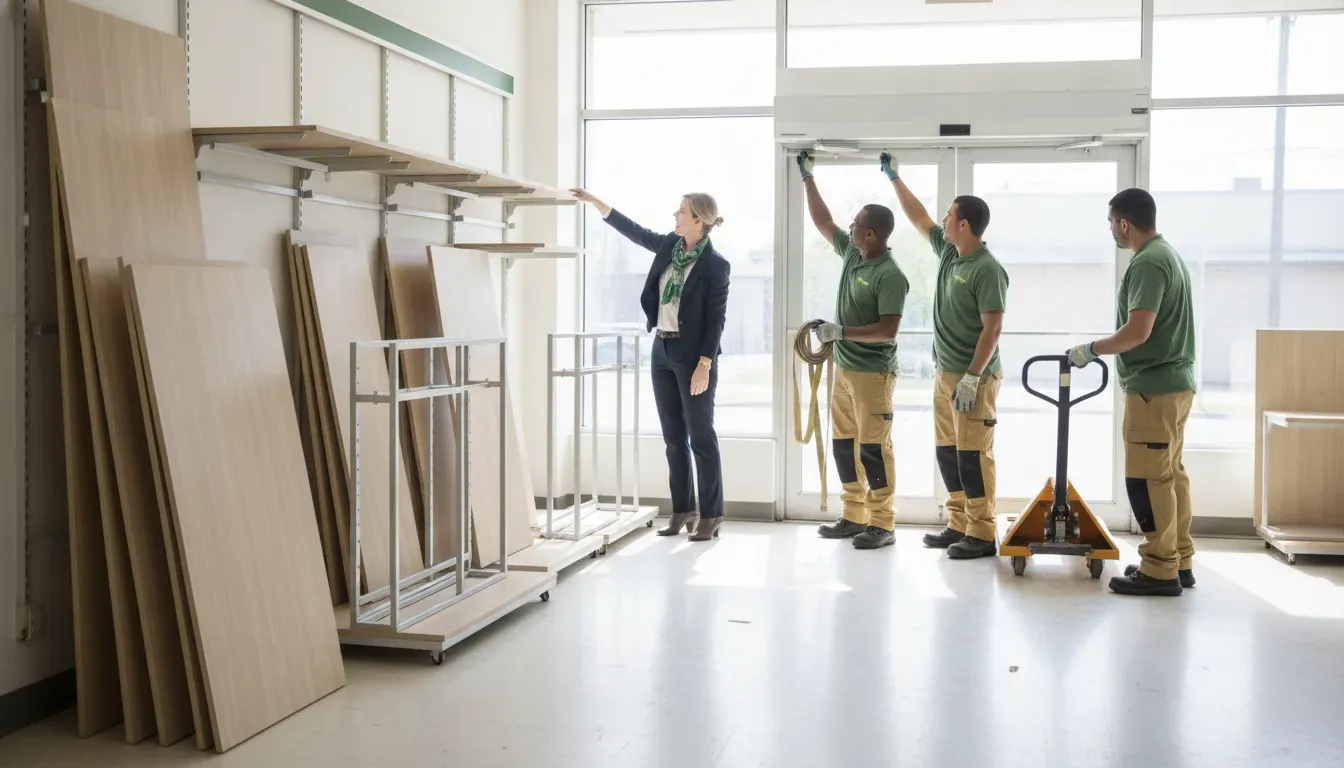
A cleanout inside a shopping center or mixed-use building has more moving parts than a pickup at a private home. The store may be empty, but the property can still be active. Coordinate the removal path with the building contact and keep customer areas, fire exits, neighboring storefronts, and shared corridors clear.
The Occupational Safety and Health Administration advises employers to keep walking-working surfaces clean and orderly and to keep floors clean and dry. Its guidance on cleanup and slip, trip, and fall prevention is written for restaurant work, but the basic housekeeping principle is relevant when a retail team is moving materials through a commercial space. Remove loose debris as work progresses, keep cords and tools out of travel paths, and address spills promptly.
- Reserve the loading zone or dock before the appointment if the property requires it.
- Measure the route from the store to the truck, including doorways, elevators, ramps, and turns.
- Keep merchandise marked “keep” away from the removal path.
- Do not ask store staff to lift heavy counters, cases, or awkward fixtures without appropriate equipment and help.
- Protect floors, walls, doors, and neighboring property where the building requires it.
- Confirm who can pause or change the scope if an attached fixture cannot be safely removed as planned.
Create a retail cleanout San Diego handover timeline
The right schedule depends on the store size, material volume, access restrictions, and the handover deadline. The following sequence gives a manager a practical starting point without assuming that every location has the same lead time.
One to two weeks before handover
- Confirm the landlord or property manager requirements.
- Separate keep, move, donate or recycle, and remove items.
- Take photos and note large, attached, fragile, or awkward items.
- Request an onsite estimate and discuss the access route.
- Reserve the loading area, elevator, or building access window.
Several days before handover
- Remove or secure merchandise, payment devices, records, keys, and personal property.
- Complete the final sort so the removal crew is not waiting on business decisions.
- Confirm the appointment window and the onsite contact.
- Share any updated building instructions, parking notes, or restrictions.
Removal and final walkthrough day
- Walk the scope with the crew before loading begins.
- Keep retained items visible and clearly separated.
- Check the sales floor, stockroom, office, break area, restrooms, and exterior service areas.
- Look for loose debris, overlooked fixtures, blocked drains, or material left in shared areas.
- Photograph the cleared space after removal and complete the handover with the authorized property contact.
Schedule a free onsite estimate for your retail handover plan.
Prepare the estimate team with useful information
A professional estimate is more accurate when the team can see the conditions that affect labor, access, and truck space. Before requesting a quote, gather:
- The store address and the required handover date.
- The number of floors and whether an elevator or stairs are involved.
- Photos or a short video of the sales floor, stockroom, loading area, and largest items.
- Information about attached fixtures, glass, bulky counters, racks, or unusually heavy materials.
- Building rules for parking, loading, working hours, elevator use, and insurance documentation.
- The name and mobile number of the person who will meet the crew and approve scope questions.
Vets Move Junk uses a volume-based estimate rather than charging by the hour. The final recommendation depends on the items, access, and truck space involved. The company describes its commercial service as full-service removal, which means the customer can point out the approved items while the crew handles loading and cleanup. For a broader explanation of the business process, see the commercial junk hauling guide and the junk removal pricing overview. No fixed dollar amount should be assumed until the specific store is assessed.
When professional retail cleanout help is useful
Professional help can be especially useful when the handover date is firm and the store contains a mix of bulky fixtures, stockroom material, and ordinary debris. It may also make sense when staff need to focus on selling or moving remaining inventory, when the building has strict access rules, or when the store must be cleared outside normal customer hours.
Vets Move Junk serves commercial customers in San Diego and other California markets. A store manager can use the locations page to review the broader service area, then request an onsite estimate for the specific property. The goal is not simply to make the sales floor look empty. It is to give the next step in the property transition a clear, documented, and orderly starting point.
Document the cleared condition
Good handover records are simple and specific. Before the crew leaves, take a wide photo from each major area and a few close photos of the places where fixtures or debris were removed. Note the date, the person who approved the scope, and any item that was intentionally left behind. If the property manager cannot attend, send the photos and a short completion note to the authorized contact. This record can help resolve questions later about what was removed, what remained, and when the space was ready for the next step.
Get a free onsite estimate for your San Diego store handover.
Frequently Asked Questions
What should I do first when preparing a store for handover?
Start by confirming the handover date, building rules, and required condition of the space. Then separate items that stay, move, are donated or recycled, and must be removed. This prevents a removal crew from taking items that the incoming tenant or property owner expects to remain.
Can a retail cleanout include shelving and display fixtures?
Retail cleanouts may include shelving, racks, counters, display pieces, and other approved store materials. Share photos and details about attached or oversized fixtures before the appointment so the estimate and removal plan account for access and safe handling.
How does pricing work for a San Diego retail cleanout?
Vets Move Junk bases its estimates on the volume of material and truck space used, not an invented hourly figure. The practical way to understand the cost is to request a free onsite estimate that considers the store contents, access route, and requested scope.
How far in advance should I schedule the cleanout?
Schedule as soon as the handover date and removal scope are reasonably clear. Earlier planning gives the property team time to approve access, reserve a loading area, and resolve questions about fixtures or retained items. Availability can vary by date, location, and job scope, so confirm the appointment window with the removal company.
Who should be present during the final walkthrough?
The onsite person should be authorized to confirm what was removed and identify anything that must remain. When possible, include the store manager and the landlord, property manager, buyer, or incoming tenant representative so the cleared condition can be documented at handover.
Once the scope, access plan, and handover standard are clear, a retail cleanout becomes much easier to manage. Request a free onsite estimate to discuss the San Diego store, the removal list, and the date the space needs to be ready.