For a warehouse, retailer, contractor, or distribution facility, pallet removal is more than getting unwanted wood out of the way. A good plan separates reusable pallets from damaged material, keeps loading areas safe, and gives the removal crew the access and volume details needed for an efficient pickup. This guide explains how California businesses can prepare pallets for recycling, removal, or a broader commercial cleanout.
Get a free onsite estimate for pallet removal
What does pallet removal include for a business?
Pallet removal for a business typically includes sorting unwanted pallets, gathering them in an accessible staging area, loading them, hauling them away, and cleaning the space after removal. Depending on condition and local options, intact pallets may be reused, repairable pallets may be recovered, and broken pallets may be routed for wood recycling or disposal.
For a business, the work often starts before the truck arrives. Pallets may be spread across a receiving dock, loading bay, storage aisle, job site, or outdoor yard. The most useful first step is to identify what needs to leave and create a clear path to it.
Vets Move Junk provides commercial junk removal and warehouse cleanout services for California businesses. Its full-service model includes loading and cleanup, so the business team does not have to dismantle a pile or lift heavy material themselves. The commercial warehouse junk removal guide covers the broader service; this article focuses specifically on the pallet-removal planning decisions that come first.
Which pallets should be reused, recycled, or removed?
The best next step for a pallet depends on its structural condition, cleanliness, ownership, and whether the business has a realistic reuse or return option. Sort pallets into a few simple groups before scheduling service, then keep each group together. This reduces confusion and helps a removal provider understand the load.
| Pallet condition | Recommended next step | What to check |
|---|---|---|
| Clean and structurally sound | Reuse, return, or ask about pallet recovery | No broken boards, exposed nails, major contamination, or unstable stacking |
| Usable with minor wear | Keep in a repair or secondary-use group | Confirm that a repair or reuse partner accepts the size and construction |
| Broken, split, or unstable | Separate for removal and possible wood recovery | Keep loose boards and protruding nails away from walkways |
| Wet, contaminated, or treated material | Ask the receiving facility or removal provider about acceptance | Do not mix it with clean wood or assume it belongs in a recycling bin |
Do not assume that every pallet has resale value or that every recycling program accepts the same materials. A pallet may belong to a supplier, rental pool, or customer, so confirm ownership and return obligations before sending it to a third party. If the business is not sure what can be reused, a commercial removal provider can help identify the removal scope, but the owner should make the final call on returnable inventory.
CalRecycle identifies clean pallets and crates as unpainted wood pallets, crates, and packaging made from lumber or engineered wood. Its recycling guidance also distinguishes bulky wood and pallet material from ordinary curbside recycling. Check the current instructions for the local jurisdiction and receiving facility instead of placing commercial pallet loads in a standard recycling cart.
How should you prepare pallets for pickup?
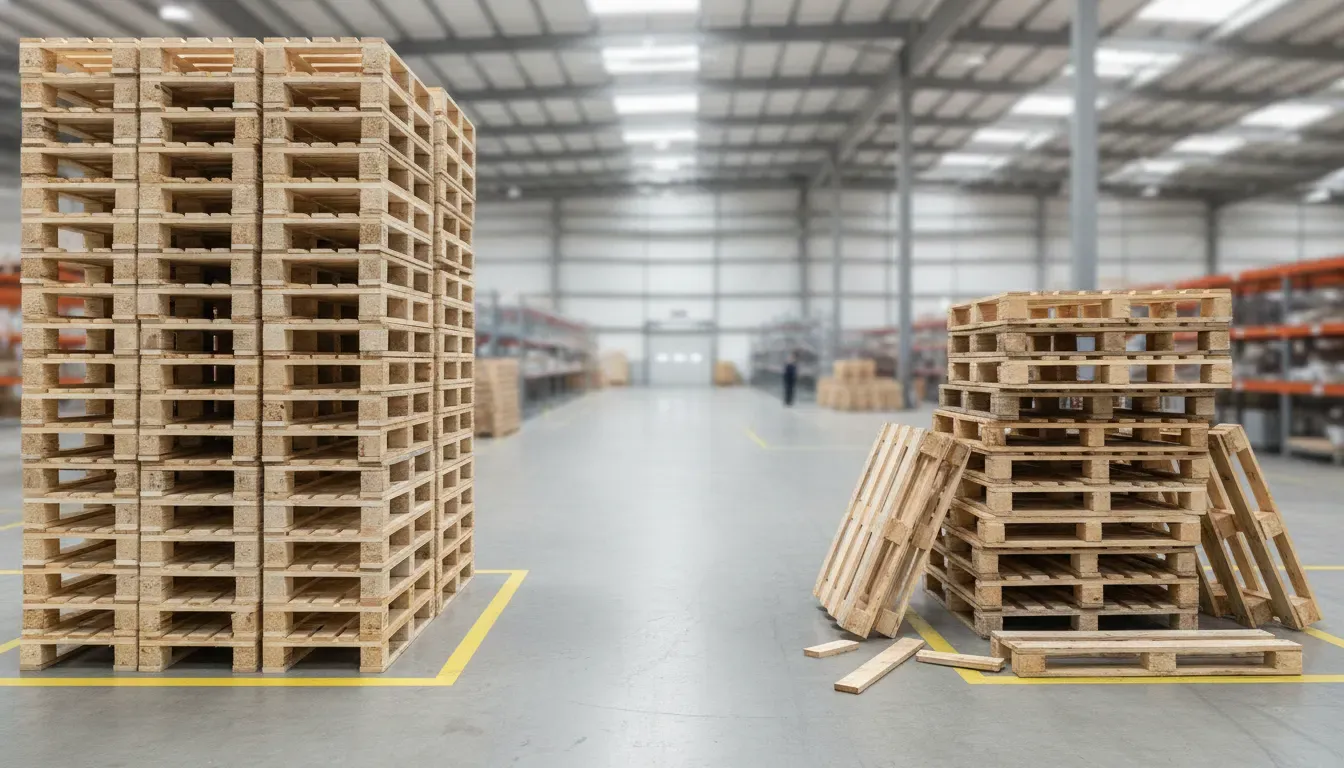
Prepare pallets for pickup by confirming the quantity, separating reusable and damaged material, consolidating the load, and clearing a safe route from the staging area to the truck. Give the removal provider the pickup address, access instructions, pallet condition, approximate volume, and any scheduling restrictions before the appointment.
1. Count or estimate the pallet volume
An exact count is helpful, but it is not always necessary. If pallets are stacked, estimate the number of stacks and the average height of each stack. Note whether loose boards, broken units, shrink wrap, cardboard, shelving, or other junk will be removed at the same time.
Photos taken from a few angles can make the estimate more useful, especially when pallets are inside a warehouse or behind a gate. Include one wide photo that shows the route to the loading area and one closer photo that shows the condition of the material.
2. Stage the pallets without creating a hazard
Place pallets on a stable surface away from emergency exits, fire equipment, vehicle lanes, pedestrian paths, and active loading operations. Do not build a stack that can lean, slide, or block a dock door. Broken pallets should be kept separate from clean units, and loose nails or boards should be removed from walking routes only if your staff can do so safely.
Do not ask employees to take unnecessary lifting or dismantling risks. If the material is unstable, heavy, contaminated, or located in a difficult area, tell the provider before the visit so the removal plan can account for it.
3. Confirm loading-area access
Tell the provider whether the crew will use a loading dock, roll-up door, side gate, alley, parking area, or interior aisle. Share door widths, height restrictions, elevator requirements, security check-in steps, and the best contact for the site. If a truck needs to park in a reserved or restricted area, arrange permission before the appointment.
4. Identify what must stay
Mark pallets that are part of active inventory, supplier returns, customer orders, or a future project. A simple labeled staging zone can prevent an accidental removal. Keep any documentation, serial-numbered equipment, or materials that are not part of the pickup outside the removal area.
What should a business include in its pallet pickup plan?
A business pallet pickup plan should define the material, access, timing, and desired outcome. The provider needs to know whether the job is a one-time surplus pickup, a recurring overflow problem, or one part of a larger cleanout. Clear details reduce delays and help the crew work around business operations.
- Pickup location: Include the business address, suite or unit, and the exact area where pallets are staged.
- Material description: Separate clean, reusable, broken, wet, or mixed pallets when possible.
- Approximate volume: Share a pallet count, stack dimensions, photos, or an estimate of how much truck space the load may occupy.
- Access details: Note docks, gates, stairs, elevators, narrow aisles, parking restrictions, and security requirements.
- Operating constraints: Identify delivery windows, customer hours, forklift activity, tenant rules, and blackout times.
- Other items: List related junk such as shelving, damaged fixtures, packaging, lumber, or warehouse debris that may be included.
- Cleanup expectations: Confirm whether the removal area should be swept or cleared of loose debris after loading.
- Future needs: If pallets build up regularly, ask about a repeatable schedule or a broader commercial removal plan.
Vets Move Junk uses a volume-based pricing model rather than an hourly rate, with the final estimate based on the space used and the details of the job. Commercial customers can request a free onsite estimate so the crew can review the volume, access, and other removal requirements before work begins. Avoid relying on a generic per-pallet assumption when the load includes mixed materials or a difficult access route.
Schedule a business pickup estimate and clear your loading area
When should pallet removal become a broader commercial cleanout?
Pallet removal may be one part of a broader commercial cleanout when pallets are mixed with shelving, fixtures, packaging, old inventory, construction debris, office furniture, or equipment. A combined plan can be more efficient when the business is moving, closing, remodeling, changing tenants, or reclaiming warehouse space.
Warehouse turnover or relocation
A move often leaves behind pallets, racks, packing material, damaged fixtures, and obsolete items. Removing only the visible pallet stack may leave the next tenant or operations team with the same access problem. Walk the space and make one list of everything that must be removed, then separate active assets from true junk.
Retail and distribution overflow
Retailers and distribution teams may accumulate pallets near receiving areas when deliveries outpace internal reuse. If the pile returns every week, the answer may be a scheduled removal plan, a supplier-return process, or a designated pallet partner. A one-time junk removal service can still help reset the area while the business decides on a long-term solution.
Construction or installation projects
Contractors and facilities teams may have pallets mixed with lumber, cardboard, fixtures, and packaging after a delivery or installation. Keep material that is part of the active project separate from items that are ready to leave. Tell the provider about nails, sharp edges, oversized materials, and restricted job-site access before scheduling.
The right scope is the smallest plan that solves the operational problem safely. If the only issue is a stable stack of unwanted pallets, a focused pallet pickup may be enough. If the pallets are blocking access to several categories of debris, ask for a commercial cleanout estimate that addresses the whole area.
How does pallet recycling fit into California removal planning?
Pallet recycling works best when clean reusable units, repairable pallets, broken wood, and contaminated material are separated before pickup. This gives a receiving facility or removal provider a clearer recovery path. EPA materials data recognizes wood packaging, including pallets, as a distinct source of wood waste and describes recycling pathways such as chipping for mulch or bedding.
Businesses should still avoid promising a specific recycling outcome without confirming the receiving facility. Conditions, wood treatments, contamination, ownership, pallet size, and local program rules can change what is accepted. A responsible plan asks where each material category is going and keeps unsupported environmental claims out of the process.
For a commercial removal appointment, ask these questions:
- Which pallet conditions and materials can you accept?
- Should reusable or supplier-owned pallets be separated for return?
- How should broken pallets, loose boards, and nails be staged?
- Will mixed warehouse junk be handled in the same visit?
- What access and parking details does the crew need?
- How will the removal area be left after loading?
Why use a full-service commercial removal team?
A full-service commercial removal team can save business staff from sorting, lifting, loading, hauling, and post-pickup cleanup. For a warehouse or job site, the value is not only the truck. It is a coordinated process that accounts for volume, access, safety, timing, and what else needs to leave the property.
Vets Move Junk is Veteran Owned & Operated and serves commercial customers across California, including businesses in the Bay Area, San Diego County, and Orange County. The company offers commercial junk removal, warehouse cleanouts, free onsite estimates, and volume-based pricing. Review the junk removal pricing approach to understand how truck space, loading, hauling, disposal, and cleanup fit into an estimate.
When requesting service, be specific about the pallet load and the business outcome. For example, say that you need the receiving dock cleared before a delivery window, a warehouse aisle opened for operations, or a mixed cleanout completed after a tenant move-out. That context helps the provider recommend the right scope instead of treating every pallet job as the same.
Request your free onsite estimate for commercial junk removal
Frequently Asked Questions
How do I get rid of unwanted pallets from a business?
Separate reusable, damaged, and contaminated pallets, then contact a pallet recovery service or commercial junk removal provider. Share the approximate quantity, pickup address, access conditions, and whether other warehouse or job-site debris will be removed at the same time.
Do businesses need to separate reusable and broken pallets?
Yes. Separating pallets by condition helps identify units that may be reused or repaired and keeps broken boards, nails, and unstable material from creating additional handling risks. It also gives the receiving provider a more accurate description of the load.
Can pallet removal be part of a warehouse cleanout?
Yes. Pallet removal can be included with shelving, fixtures, packaging, obsolete inventory, construction debris, or other commercial junk when a business is moving, remodeling, changing tenants, or reclaiming space. Tell the provider the full scope before the estimate.
Can I put business pallets in a recycling bin?
Do not assume that a commercial pallet load belongs in a curbside recycling bin. Confirm the current rules with the local recycling program or receiving facility. Clean pallets and crates are a distinct wood packaging material, and bulky wood may require a separate recovery or removal option.
How should pallets be staged for pickup?
Place pallets on a stable surface in an accessible area that does not block exits, fire equipment, vehicle lanes, or active loading operations. Keep clean and damaged pallets separate, confirm truck and dock access, and tell the provider about gates, height limits, security, and scheduling restrictions.
How is commercial pallet removal priced?
Commercial removal estimates can depend on the volume, material mix, access, labor, hauling, disposal or recovery requirements, and cleanup. Vets Move Junk uses volume-based estimates and offers a free onsite estimate. A site review is more useful than assuming a fixed price per pallet.
Book a free onsite estimate for pallet removal in California
With a clear pallet count, separated materials, safe staging area, and accurate access details, a California business can make pickup simpler and reduce disruption to daily operations. If pallets are only one part of a larger warehouse, retail, contractor, or property cleanout, request an onsite estimate that covers the full removal scope.
Sources: CalRecycle clean pallets and crates material definition; U.S. EPA wood material-specific data.